Chiloe

6 January 2020

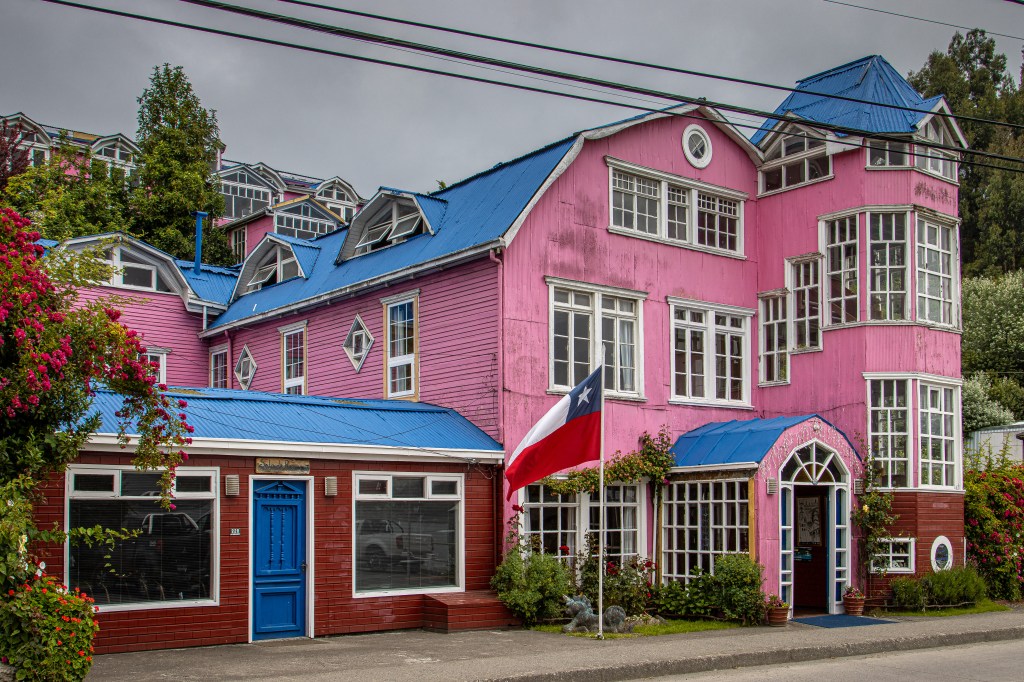
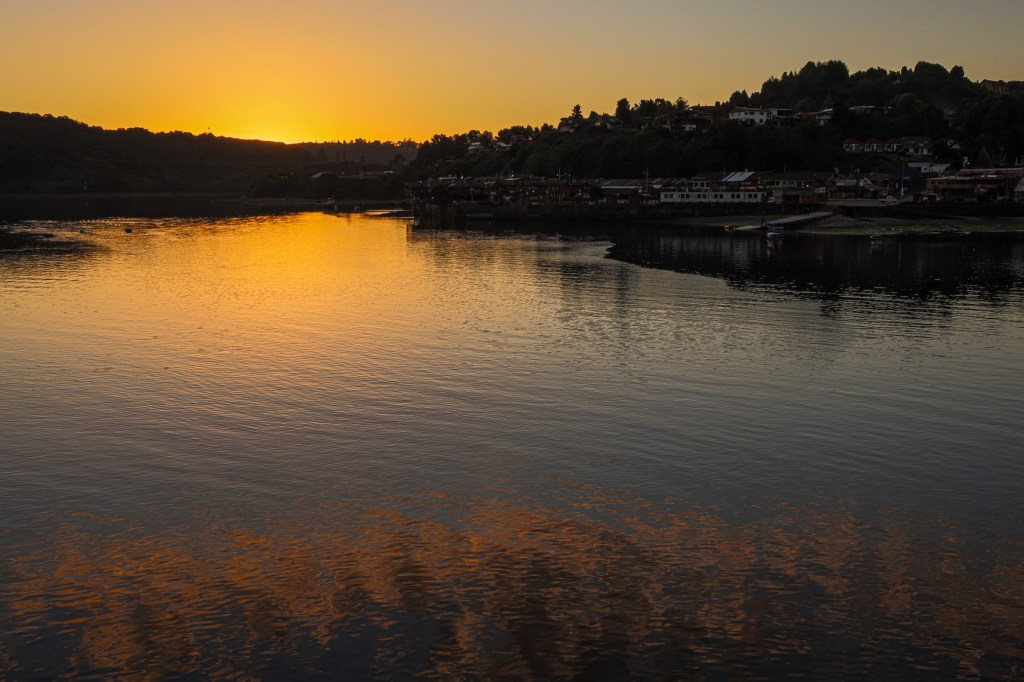
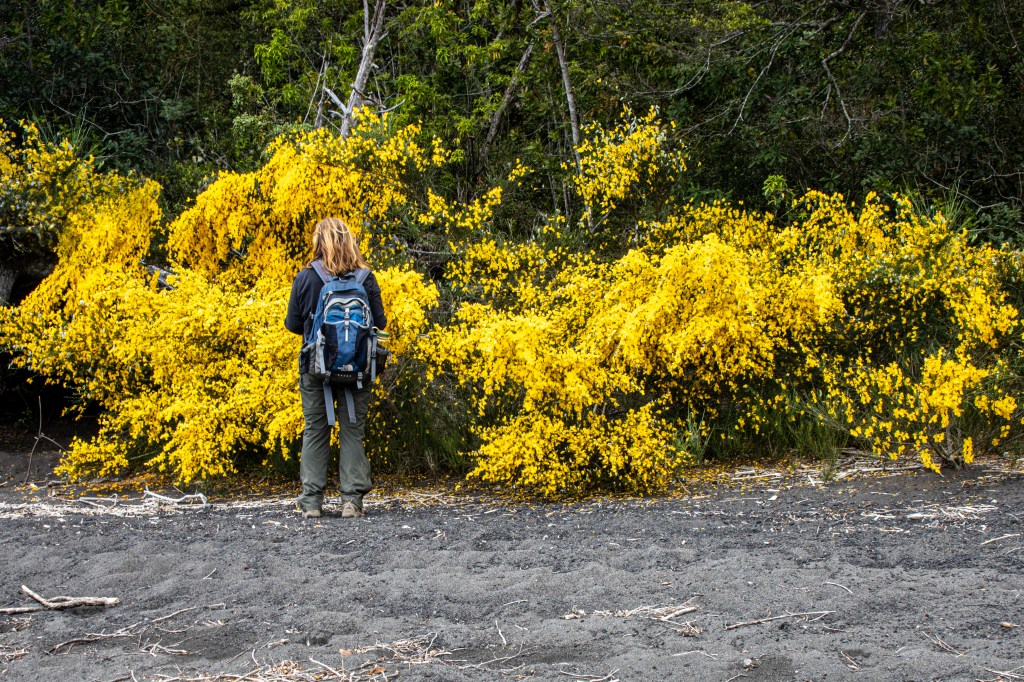
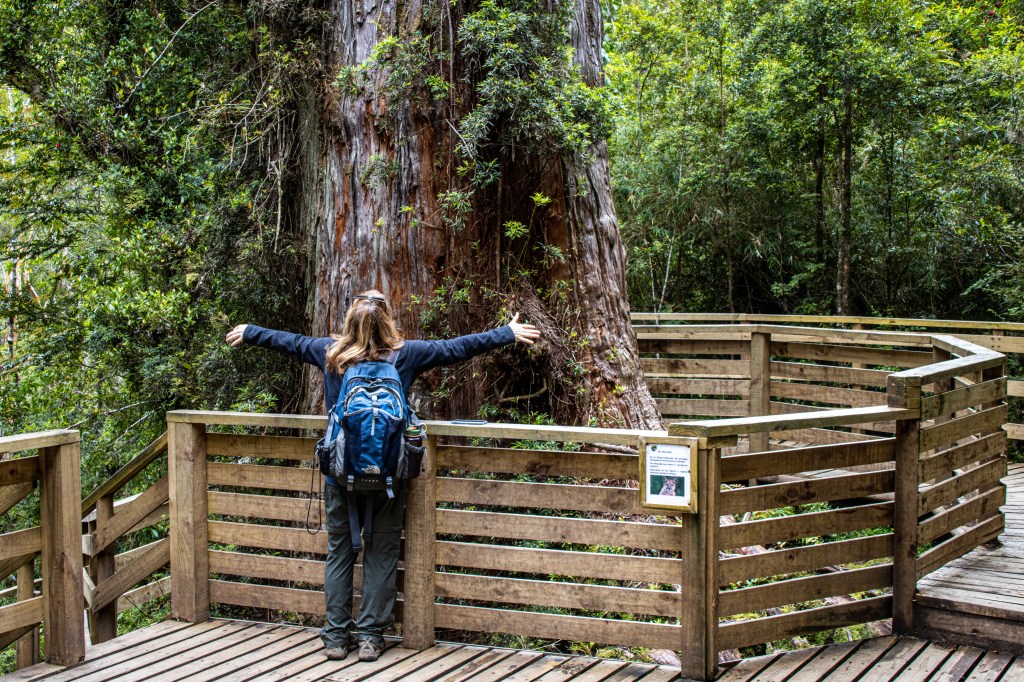
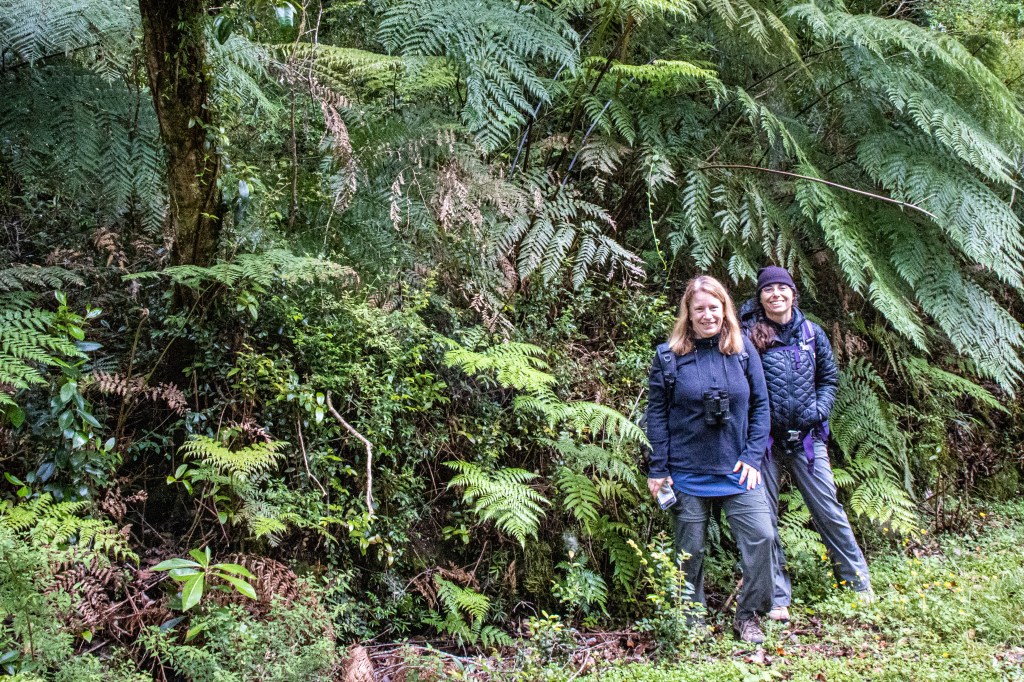
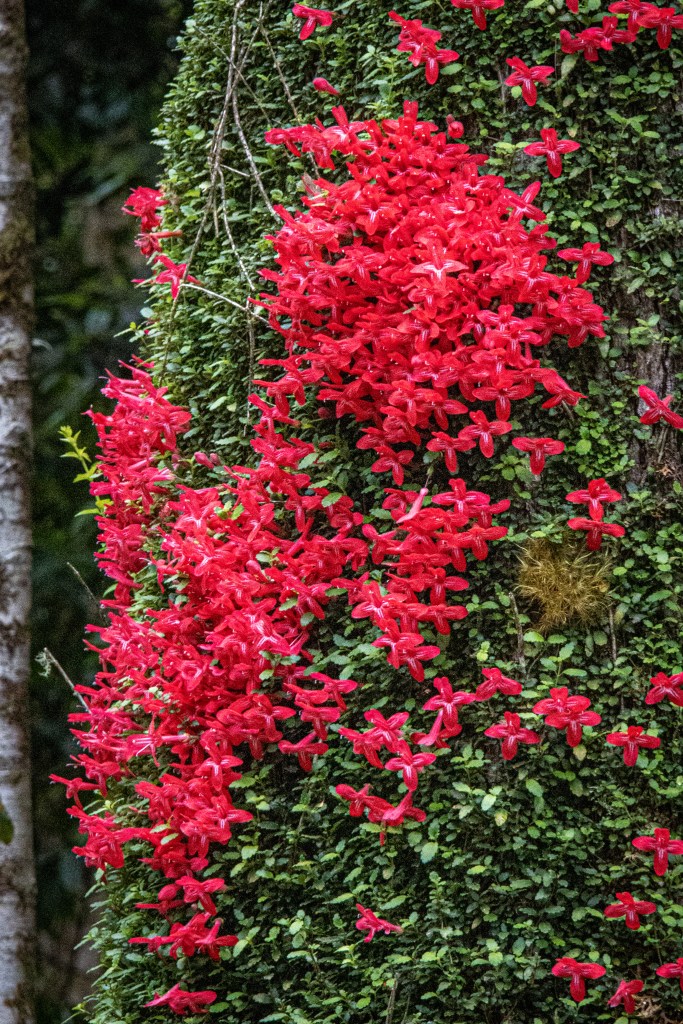
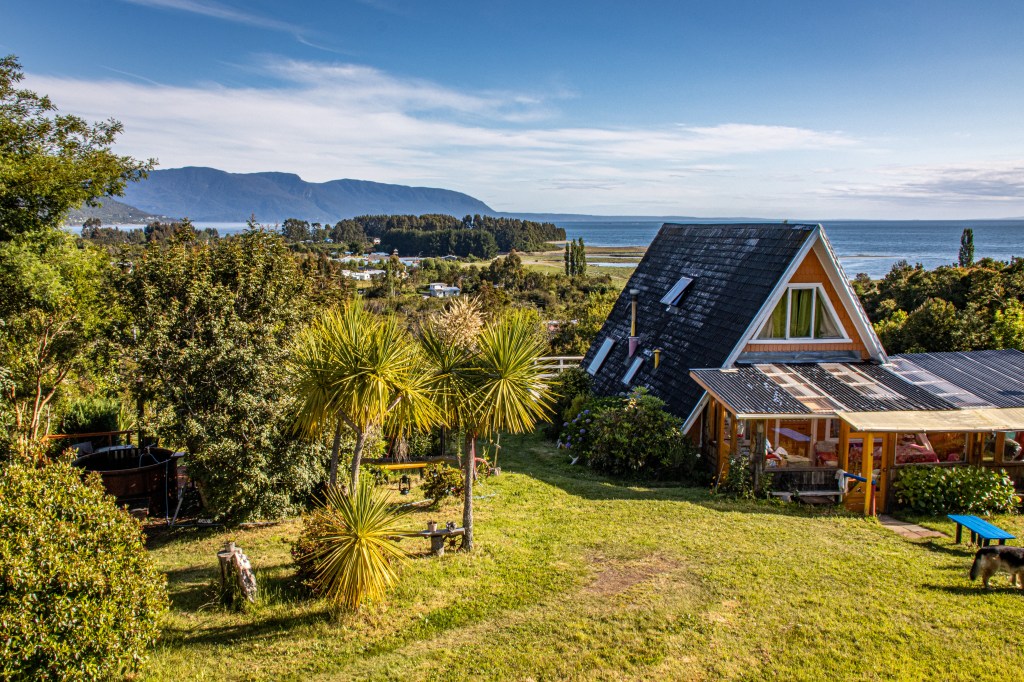
For a long time I’ve wanted to visit Chiloe, an archipelago in south western Chile, so when Susan and I started planning this trip that area was on the top of the list. What appealed to me about the area were the descriptions of the rolling green farmland, interesting fishing villages, friendly people and stories of witches and gnomes who got into all sorts of trouble in the night. We found all of that and a bit more but, sadly, no gnomes or witches.

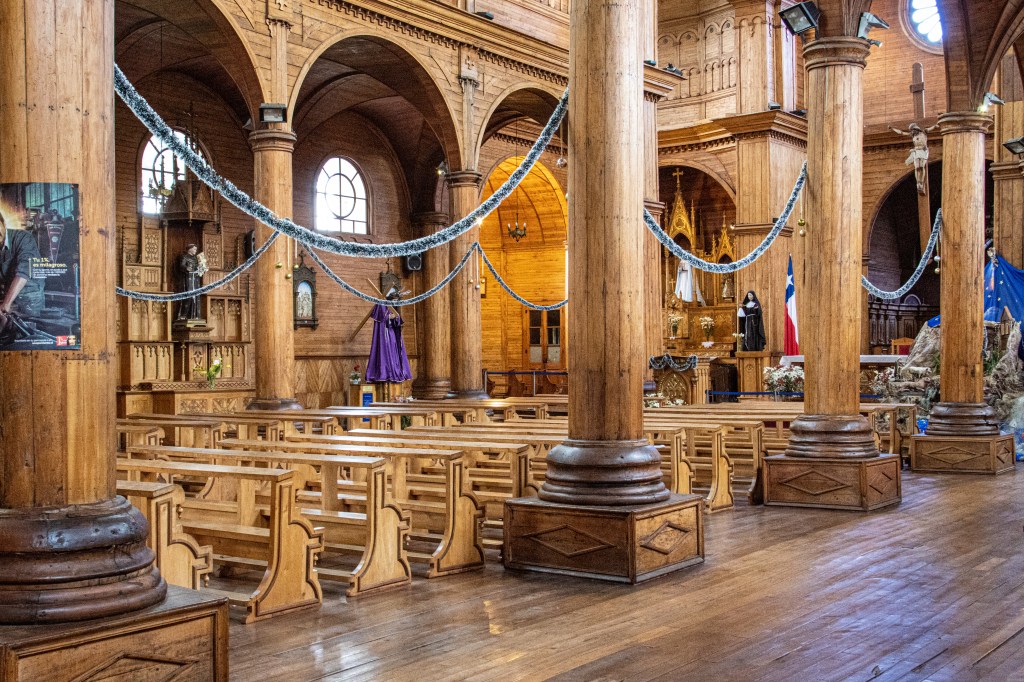
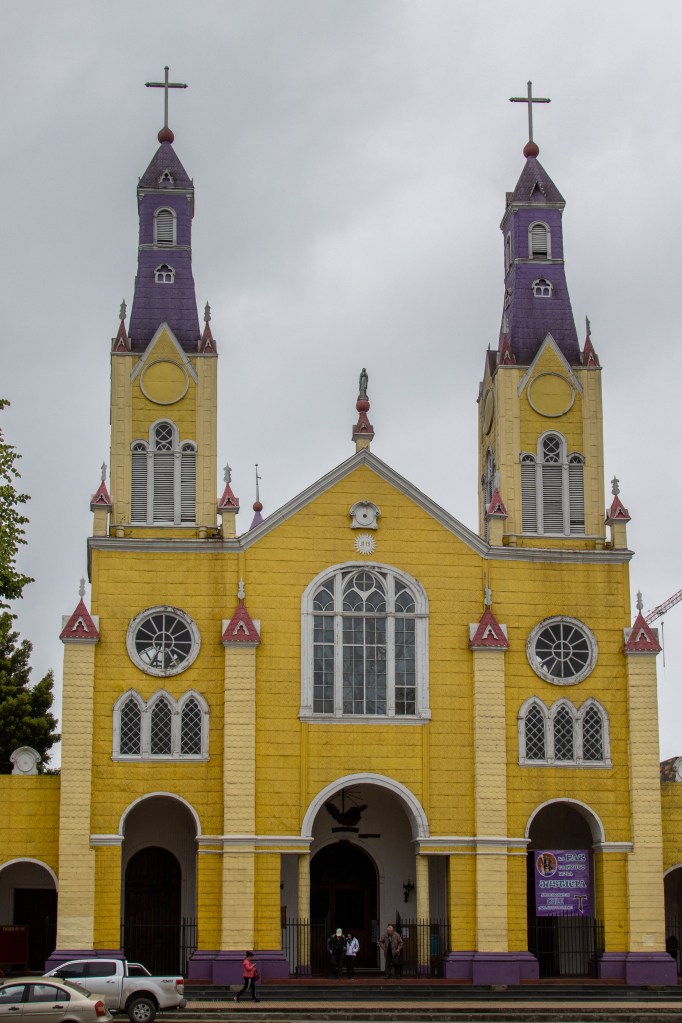
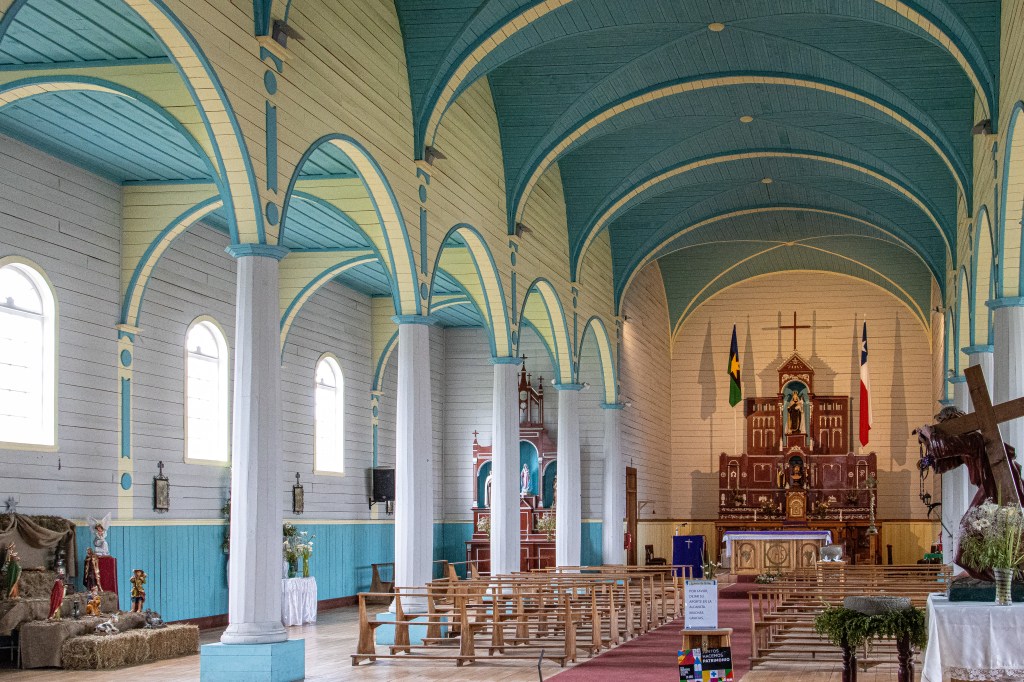
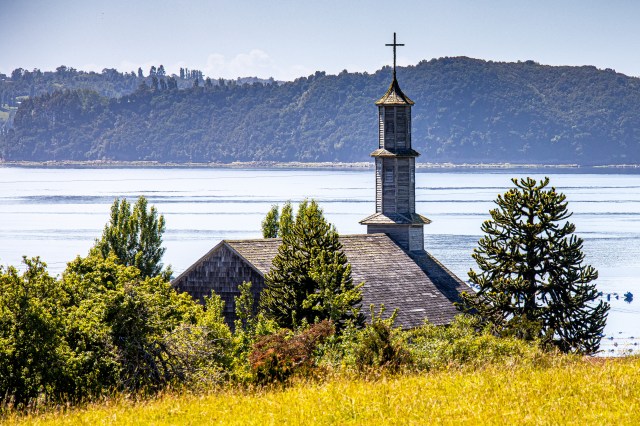
Another thing that Chiloe is known for is the old wooden churches dating back into the 18th and 19th centuries. Something like 16 of these churches have been designated as UNESCO World Heritage sites and have been restored and are being maintained. While neither Susan nor I are religious people, we did find that exploring for some of the churches led us to interesting out of the way places.
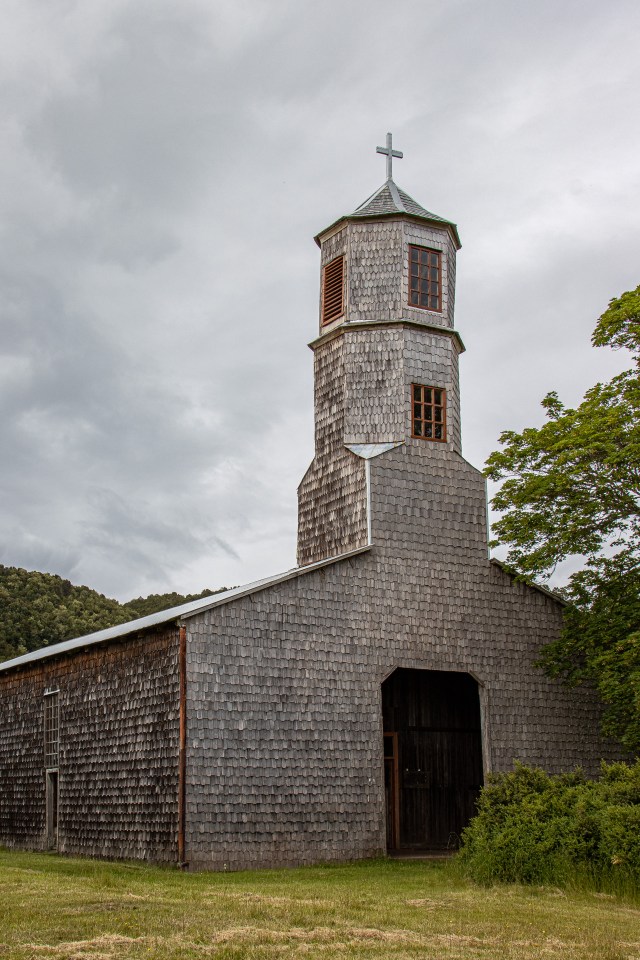
The churches were very similar in style to those we saw in Europe a couple years ago. They were just smaller and all wood. Overall, these were interesting and fun to visit.

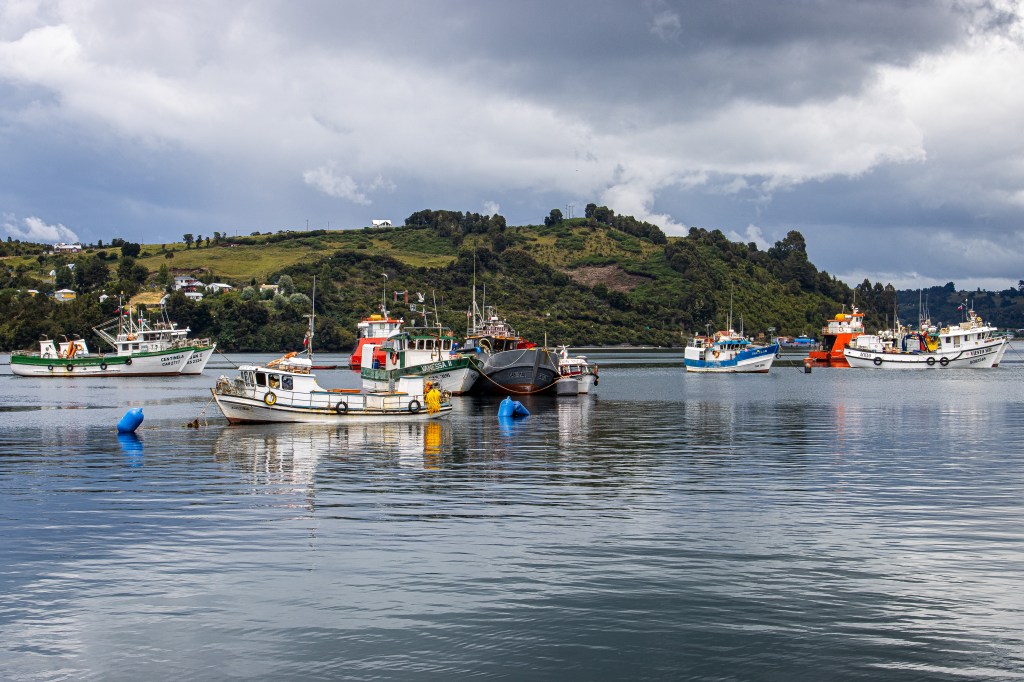
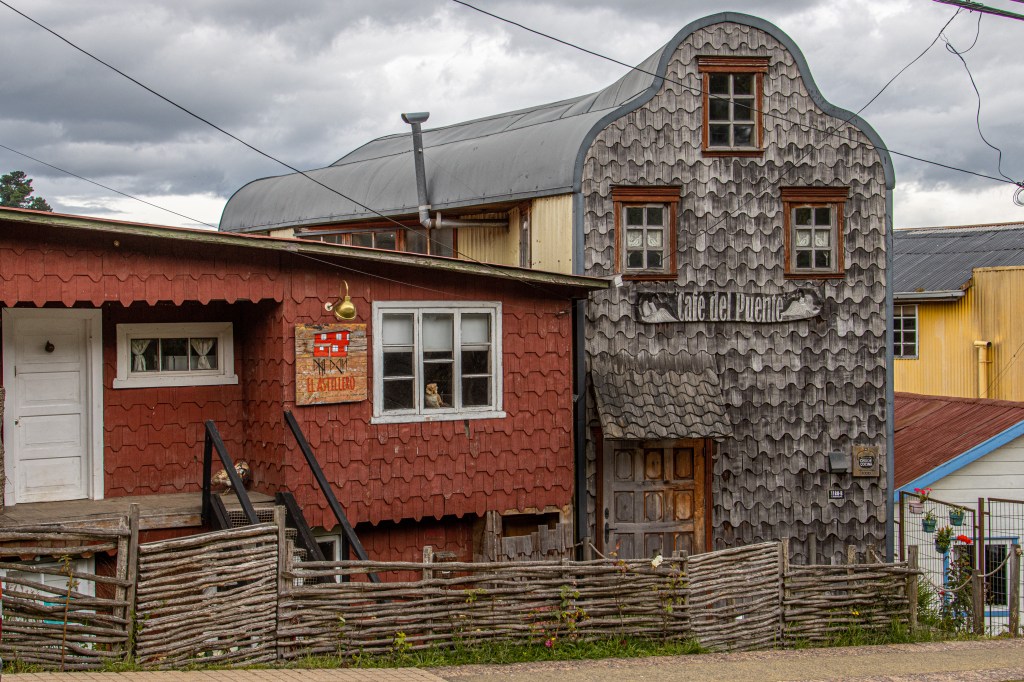
But more interesting were the many small fishing villages and rolling green countryside throughout the islands. This was just a very pleasant area to visit – muy lindo y muy tranquilo.
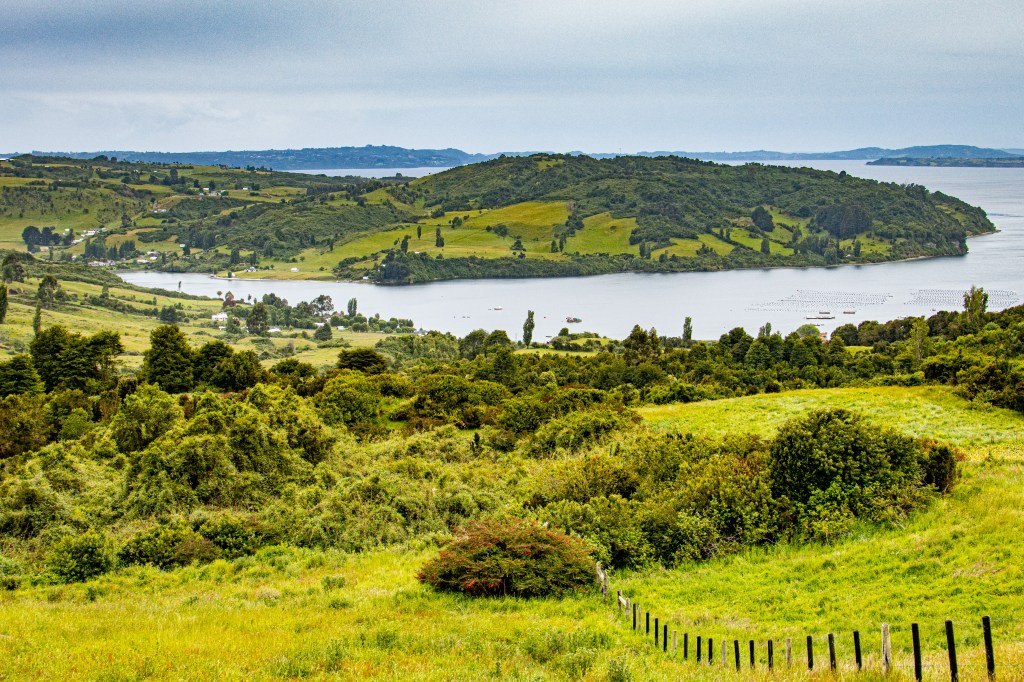
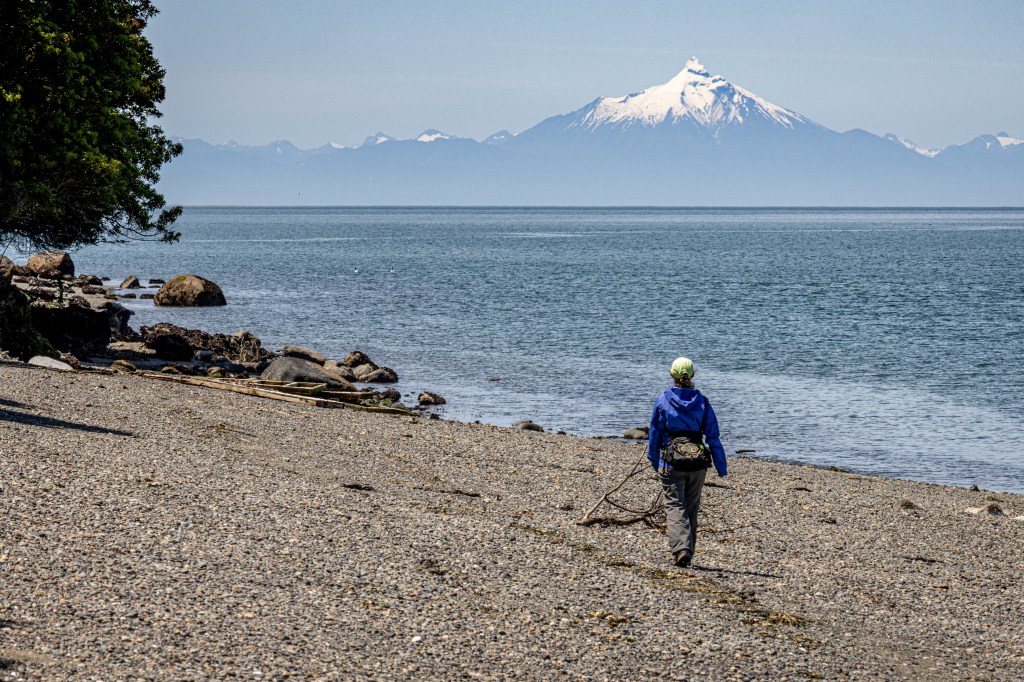
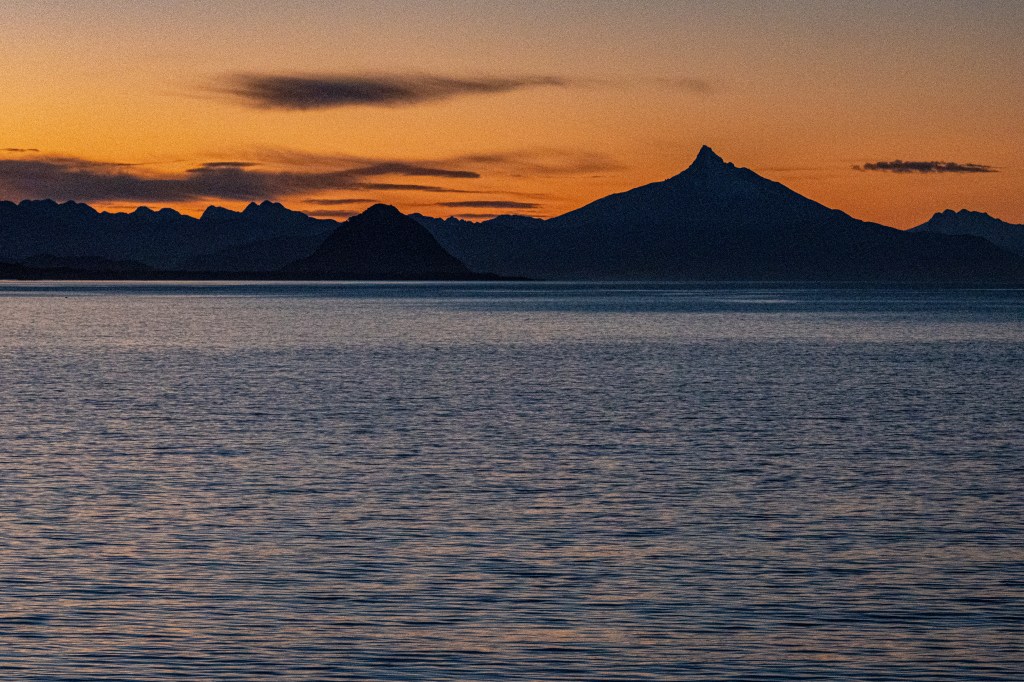
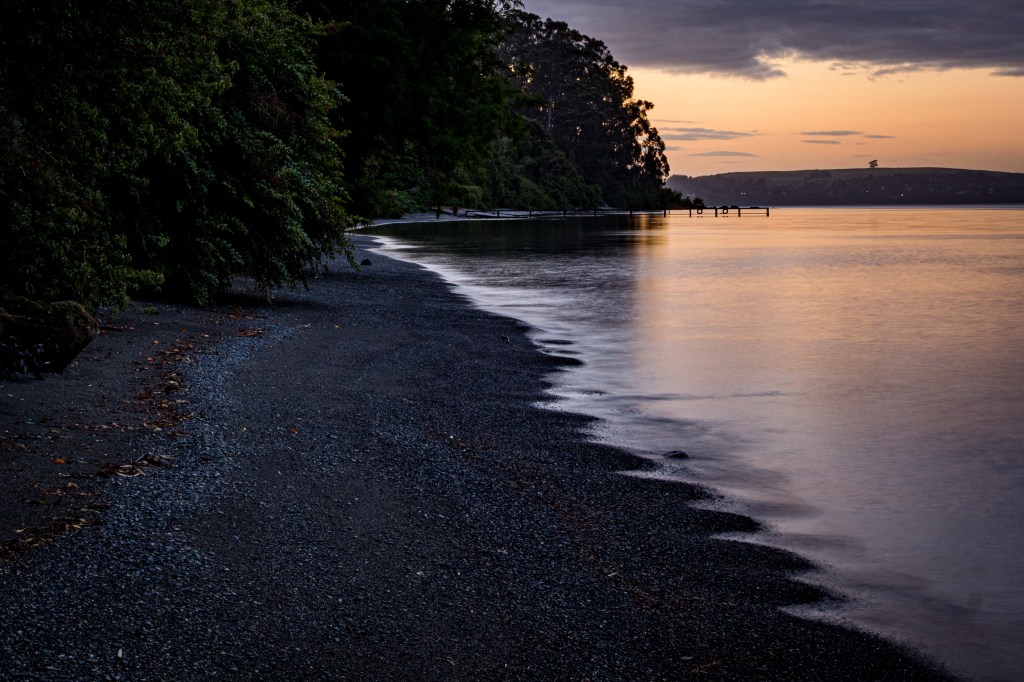
One of the spectacular things about the eastern coast of Chiloe is that, looking across the Golfo de Ancud to the east, we could nearly always see the Andes and Volcán Calafate. When we were lying in bed in our hotels or walking on the beach or just driving down the road, that backdrop of snow and peaks was always there waiting for us (and we’re in the midst of it all now!).

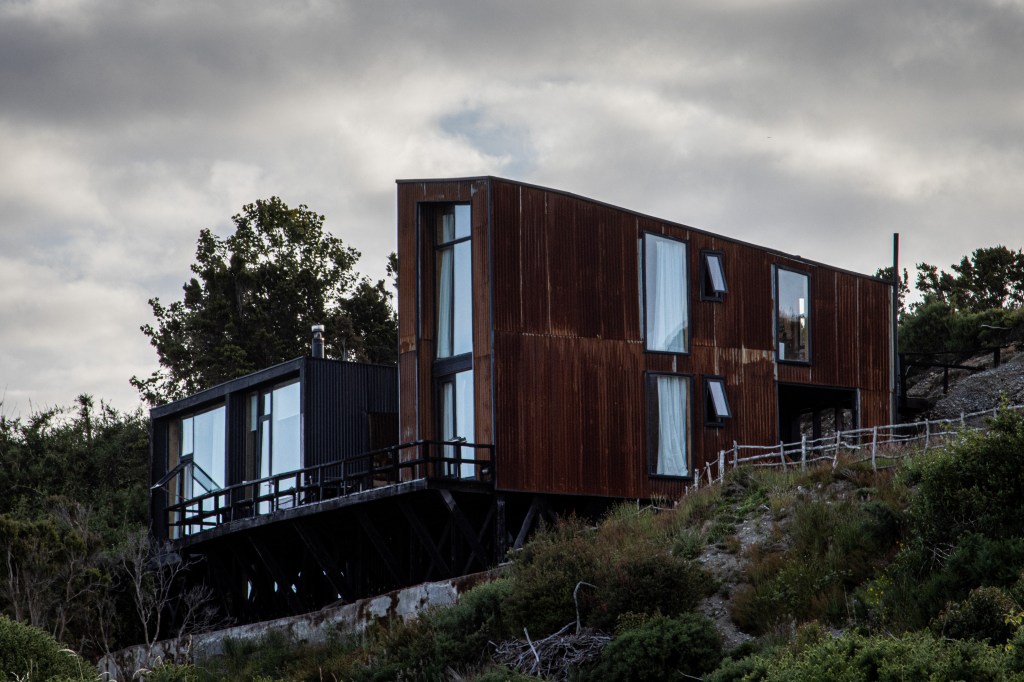
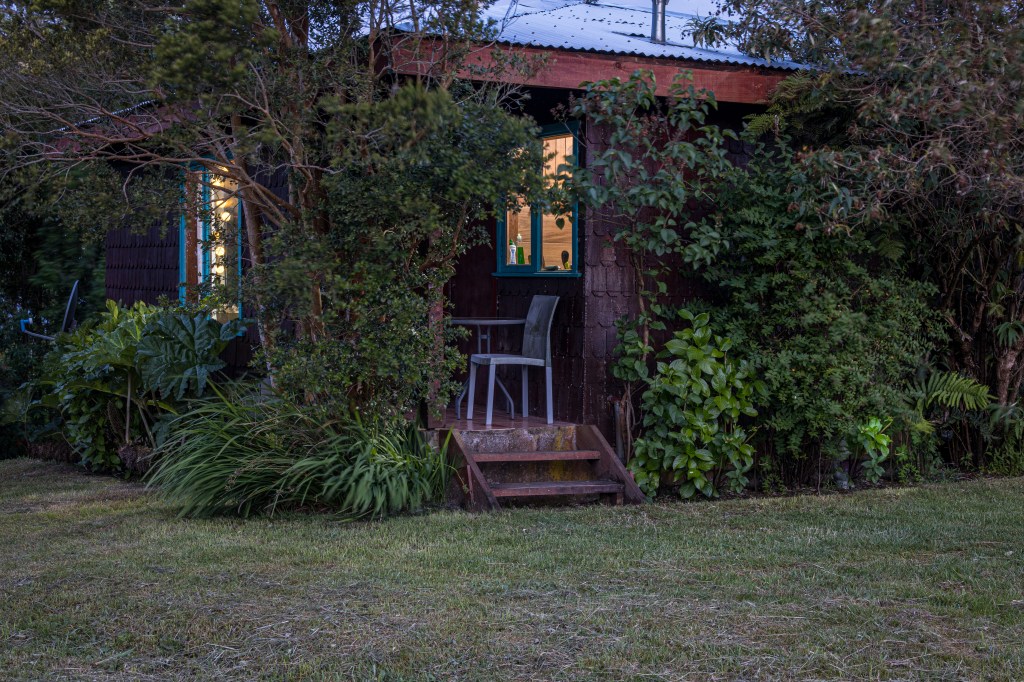
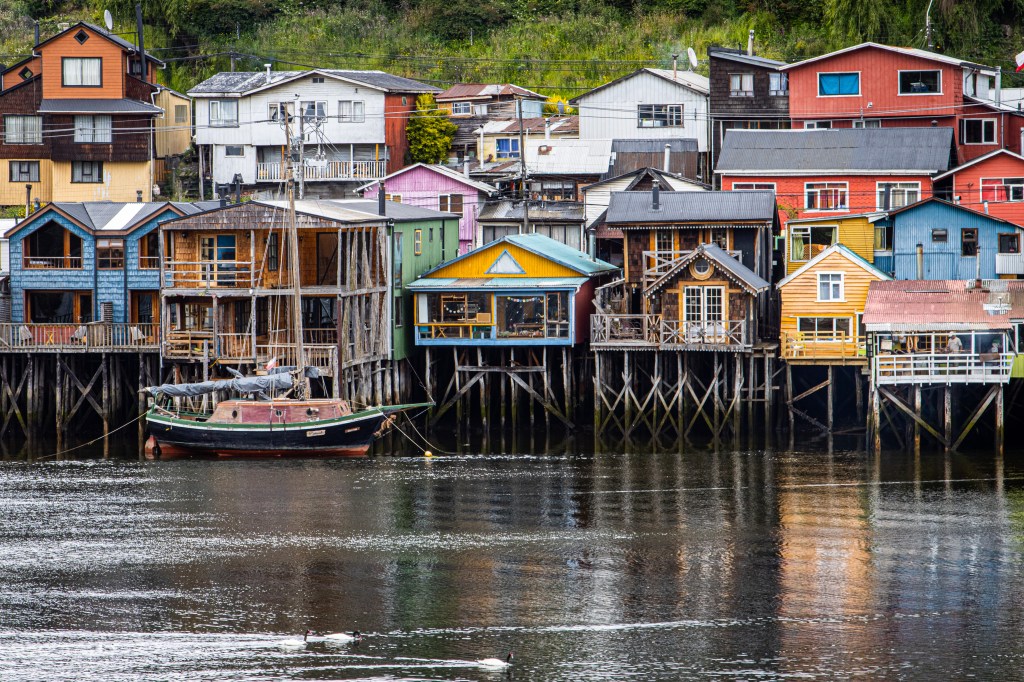
Our lodging was a fun mix in Chiloe – a farm stay near Quemchi, a palafito in Castro and quite a spectacular modern(ish) lodge in Queilén – El Coo Lodge. All were fun, run by interesting people and in each we met other travels with whom we could share our journeys.
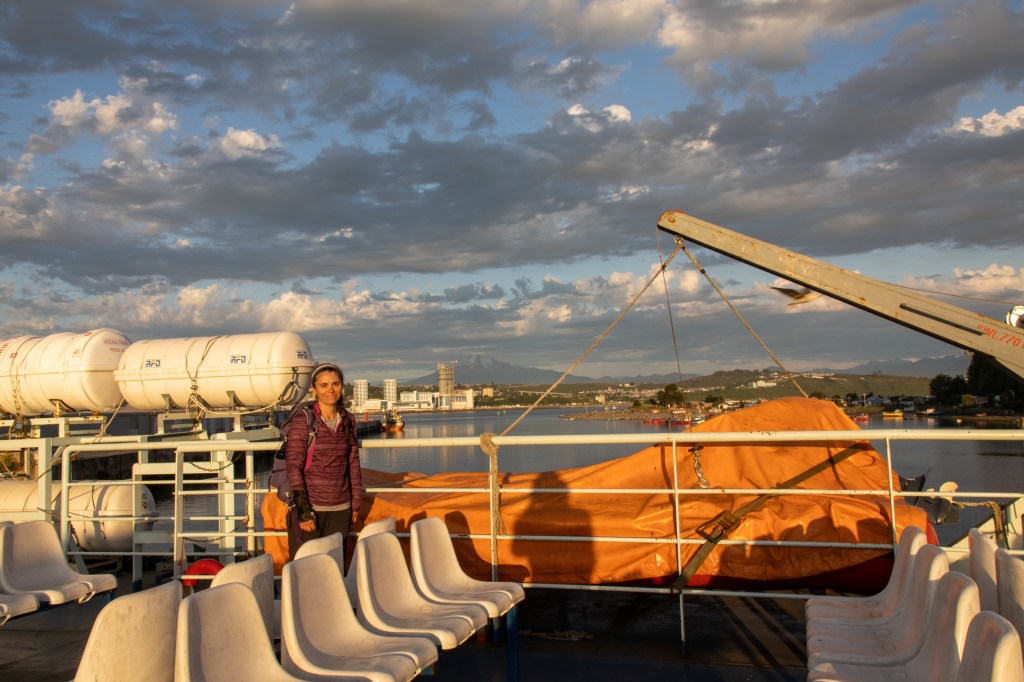
When you travel in southern Chile in a car you have to use ferries in a number of places to get between islands or across the fjords of the southern archipelagos. They often run well but we had been warned that you have to be flexible because sometimes they don’t.

So, when we were ready to leave Chiloe, from the port of Quellón, and travel to Chaitén back on the mainland, we had booked a ferry for the 4-hour crossing. It got cancelled a day before departure and we had to scramble to get to our next hotel on time. We did find a ferry that had room for us and our car, running from Puerto Montt to Chaitén, so we hightailed it back to P.M., caught the ferry at 11PM and got into Chaitén at 8 the next morning. We were maybe a little ragged for lack of sleep but in the end it all worked out and we’re now back in the rainforests at the base of the Andes.
We’ve been here in Chaitén for a few days now, exploring the mountains, volcanoes and glaciers, and we’re about to head north to Caleta Gonzalo to do more of the same. As far as we can tell, we won’t have internet connection until about the 15th when we get back to our hotel in Puerto Varas.

After the 15th I’ll send along few more photos before we fly back to Colorado on the 20th.
Travels with Julie the trip naturalist

6 January 2020

Yep, it’s been a little while since we’ve written which is OK. After all, we’ve been busy enjoying southern Chile. At this point, while we have a good connection to the internet, we’re going to put together a few photo-heavy posts to try to catch up.

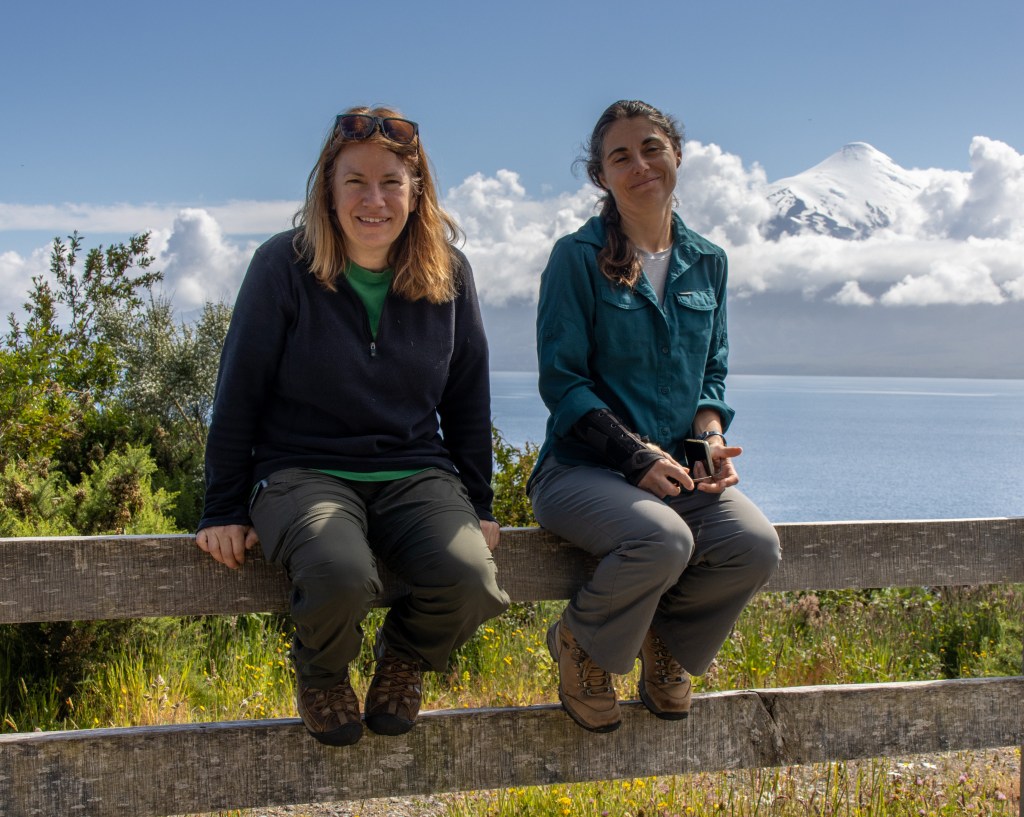
Julie and Susan with Volcan Osorno in the background

We left Peru with our very good friend and protector of Leo, Julie, who wanted to come to Chile in search of interesting biological stuff. Where better to find lots of that than in the temperature rain forests of Southern Chile. How many histories of exploration have we all read over the years where there was always a naturalist on board the expedition. Well, Julie was our naturalist and, as we always do, we learned a lot about these rain forests!

We started this part of our trip with a few days of exploring around Puerto Varas Chile where we had a nice little cabin on Lago Llanquihue. It was a nice rustic little place with one of the friendliest hosts, Javiera, that we’ve had. It also made a good base for exploring.

After Puerto Varas we moved south to Lenca along the Careterra Austral, south of Puerto Montt. The area was much like the Mendocino coast and reminded me of our Caspar cabin. Even many of the plants we have up there are down here. The fuchsias that grow near Caspar are native to this area of southern Chile.

But, too quickly, Julie had to go take care of our dogs and see the family for Christmas and Susan and I wanted to wander south and explore Chiloe. So we got Julie onto a plane for a trip that was way too long, though that’s Julie’s story to tell, and we drove our car onto the ferry to take us south. We were sad to see her go but we knew that our puppies back home would be happy to see her come back.
Having lost our naturalist doesn’t mean we’ve stopped nerding out on everything with a metabolism that we see. One of the things that bonds Susan and I is our love for all things of nature and we do spend as much time with our heads down in the fungi and mosses as we do looking at the beautiful world around us. This is a beautiful, crazy world and it’s a lot of fun trying to figure it out!

Next up Chiloe, then on to the Careterra Austral in northern Patagonia …

Inca Trail & Machu Picchu

16 December 2019

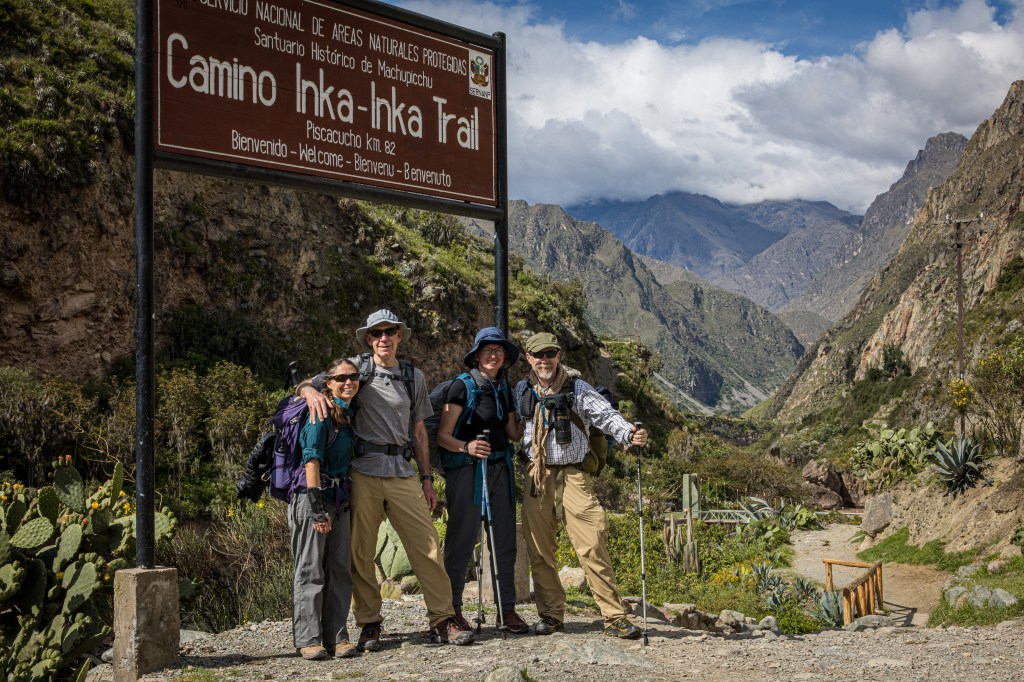
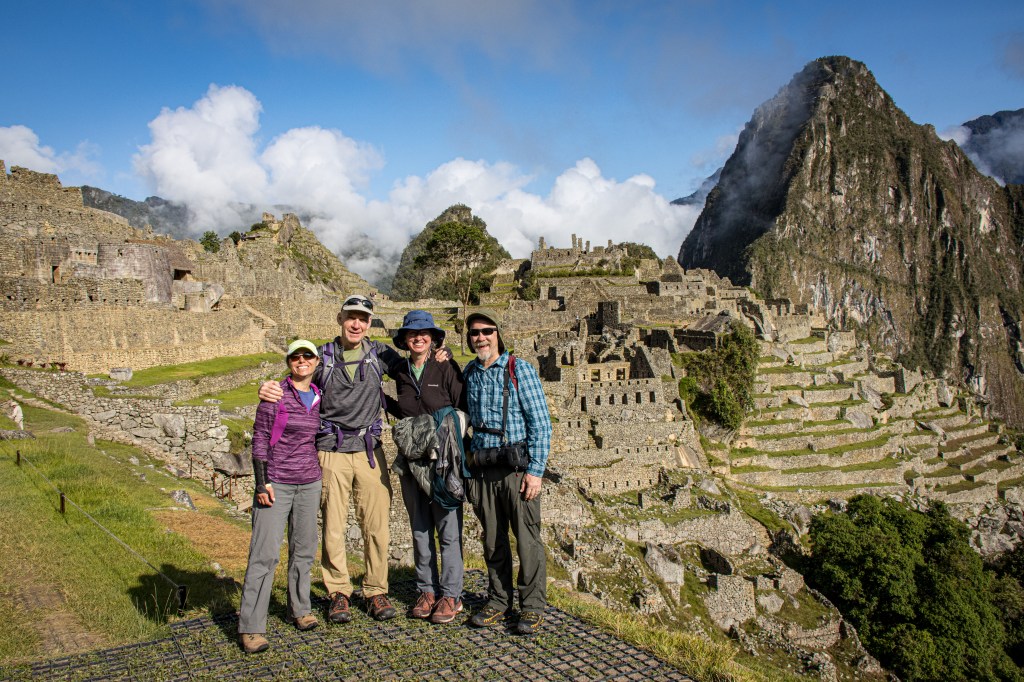
Susan, Karen, Mike and I at the start of the Inca Trail – December 7th 2019

We’re in southern Chile now, currently in Puerto Varas and headed south to Lenca today, and we’re finally getting around to writing something about our hike on the Inca Trail. Needless to say, that was a beautiful trip in some of the prettiest country we’ve walked in.

Susan and I were joined by Karen and Mike Bryant for this trip and we booked the hike with a local Cusco company – Llama Path.
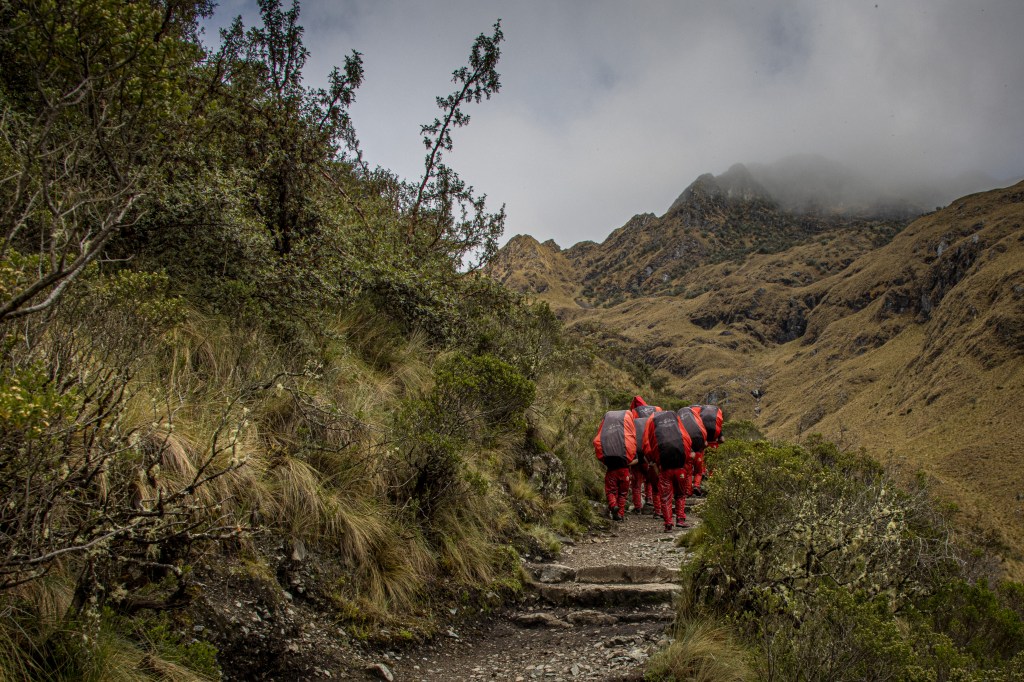
Hiking the Inca Trail, by Peruvian law, is no longer something you get to do by yourself, you have to have a guide. Coming from a background of only doing self support trips, whether backpacking or running rivers, it was just a little bit of a shock when we learned that our group of 4 was going to have one guide, one cook and 9 porters to carry a small expedition camp for us. That’s more than 2 supporters per each of us!

While the notion of having all that support was honestly a little embarrassing at first, we came to understand it’s value to both the trail and to the the local indigenous population. Given the large number of people that hike the trail every year, using local guides helps maintain it in a reasonably pristine way. We were impressed that the trail was well maintained and free of litter which might not have been so if it was open to unlimited self support trips. Sure, the fun of pulling together your own trip might be lost but, once we got into it, we found that the pampered approach worked for us on this one.

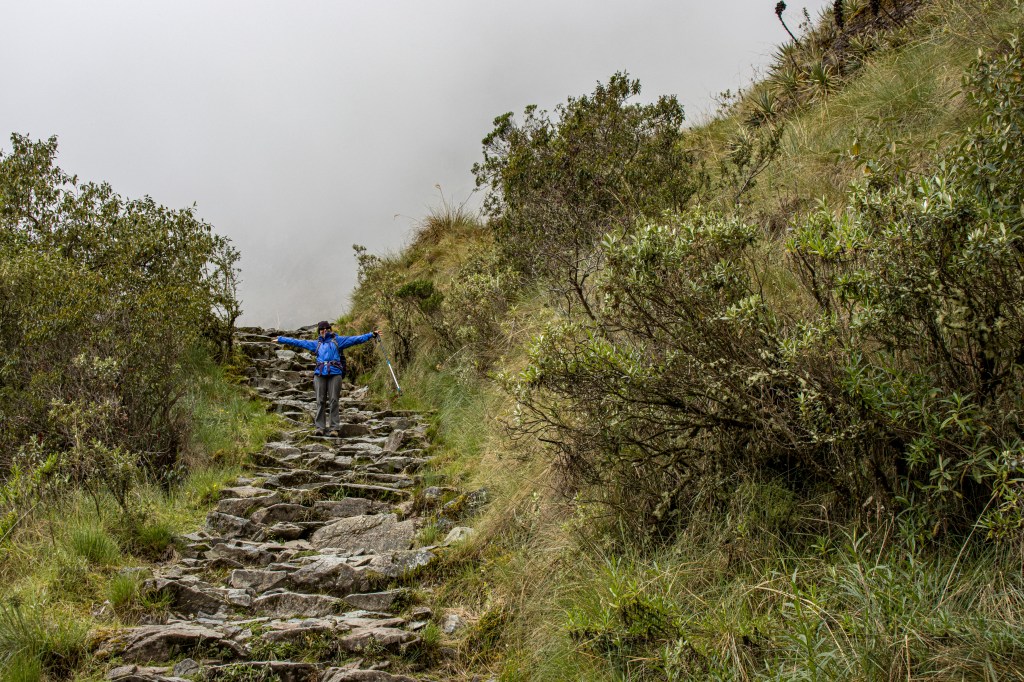
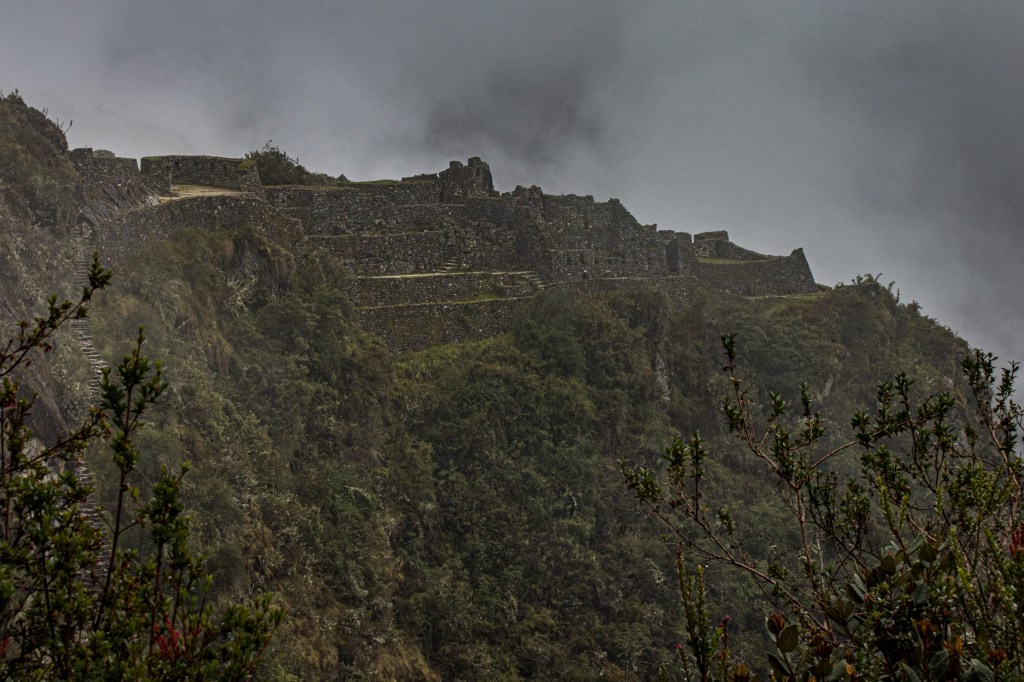
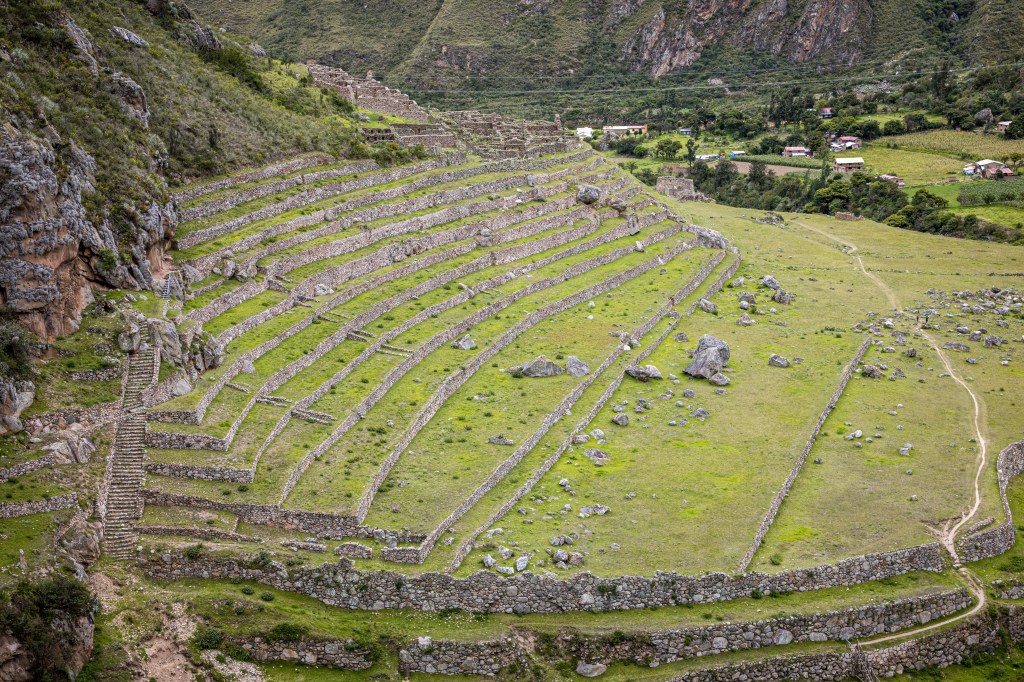
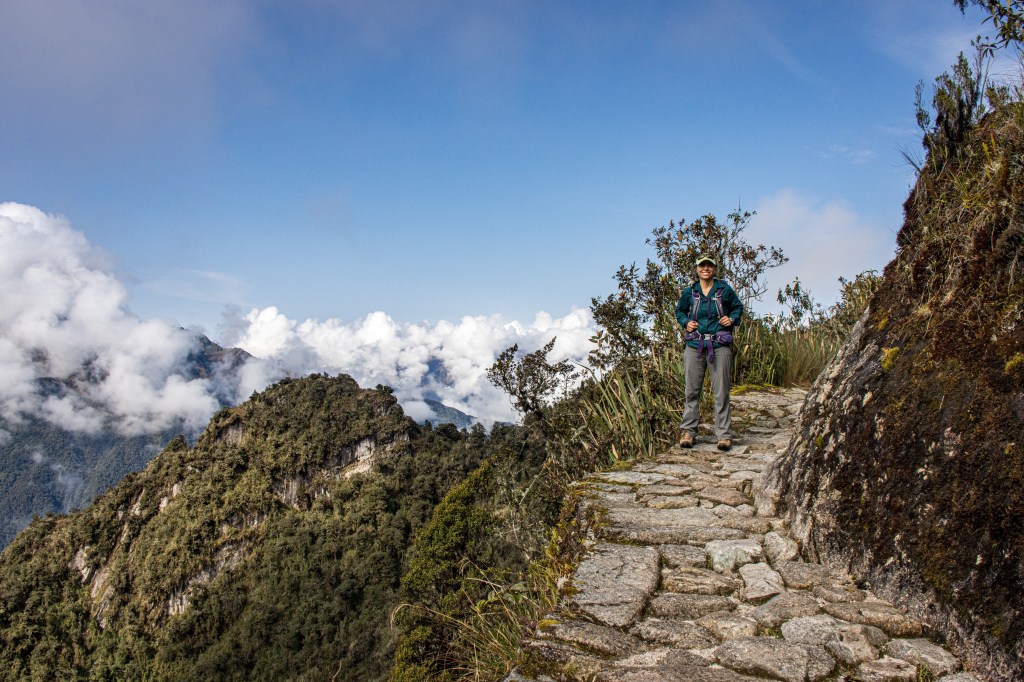
Susan and I took a little side trip up to a pinnacle to look at the valley, and ruins below. This was midway through our first day on the trail.

The other side of the story is the porters. These were all young to middle aged men from indigenous mountain communities in the high Andes. They all come from homes where Quechua was spoken as the primary language. There is little or no work up there so, as we hear the story, the men mostly leave town to work in tourism, as porters and guides, or in mining or other similar activities. So at some level, we’re helping them out by providing a living that doesn’t involve plundering the earth and destroying some of their beautiful natural assets. On top of that, porting backpacks is probably a lot safer than the conditions found in Peruvian mines.

From everything we could find out, it appears that Llama Path is one of the leaders in providing good living and working conditions for their porters.

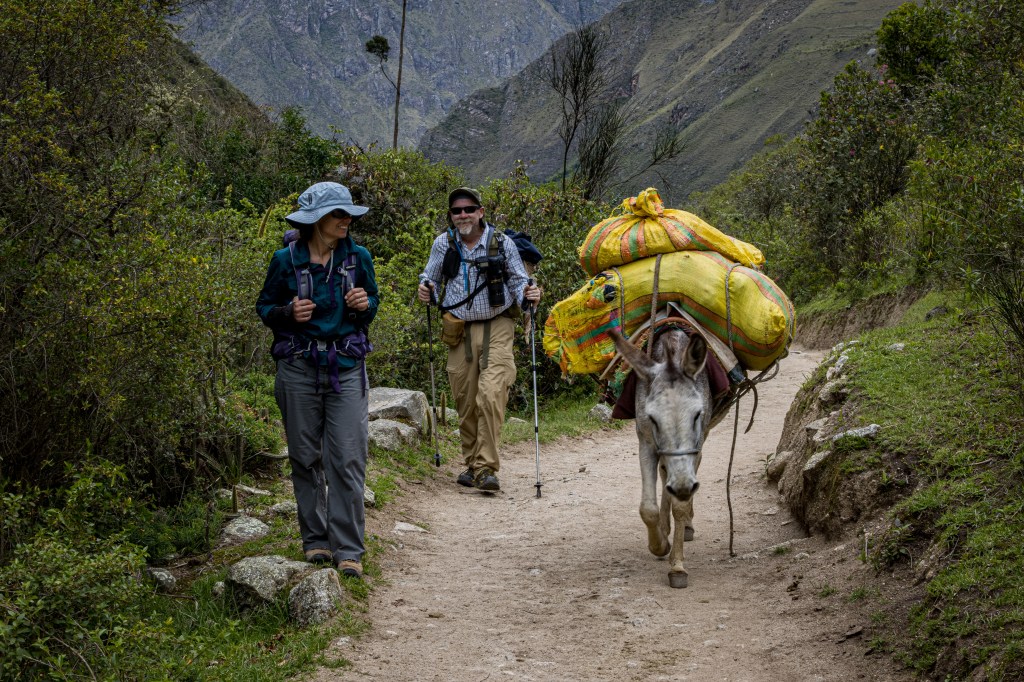
The trail started relatively flat as we followed the Urubamba river downstream and into the Machu Picchu reserve. For the first day we walked through small villages that were only accessible by hiking in on the trail or packing in the things people need with horses or donkeys.

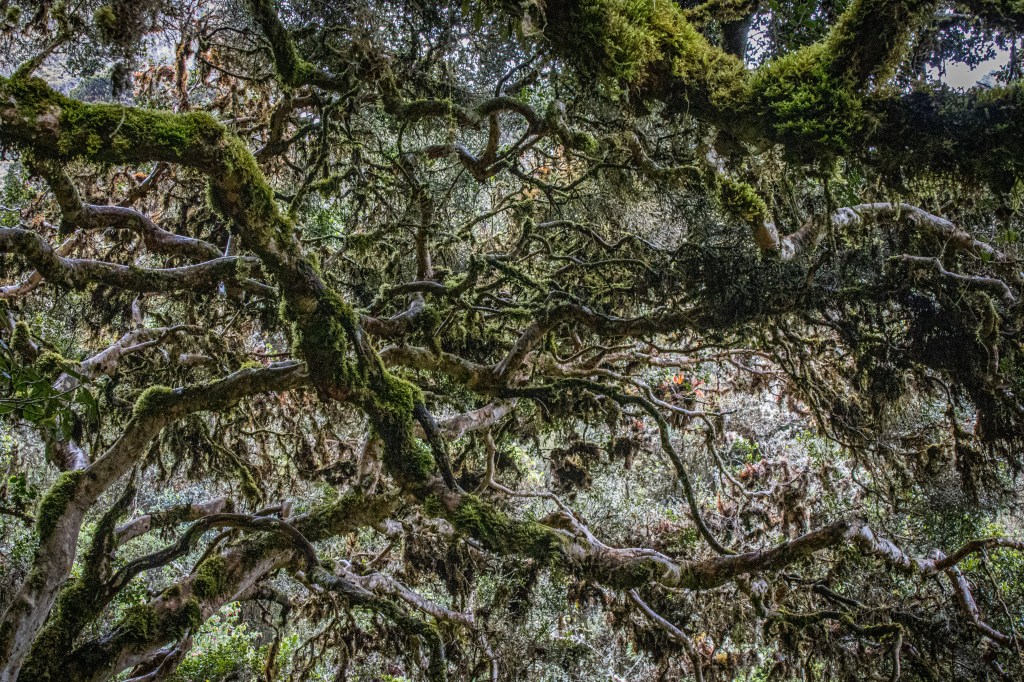
Dense forests of moss and bromeliad covered trees hung over our heads throughout the hike

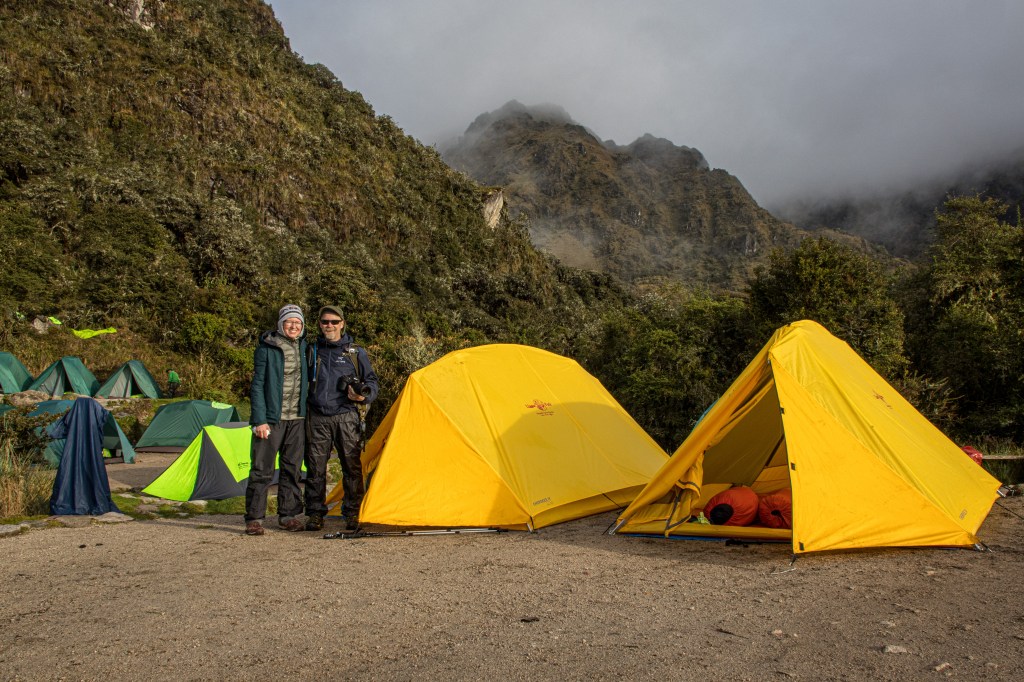
We hiked about 10 miles on the first day, starting at 8,900 feet in elevation and ending at 10,800 feet for our first campsite. Our guide, Pepe described the ruins and a bit of Inca history along the way – we passed ruins at Wayallabamba and Ayapata. Over the course of our 4 days of hiking with Pepe he built a history, using the ruins as a catalyst for story telling, of the indigenous people of the Andes from pre-Incan times through to the invasion of the Spanish in South America.

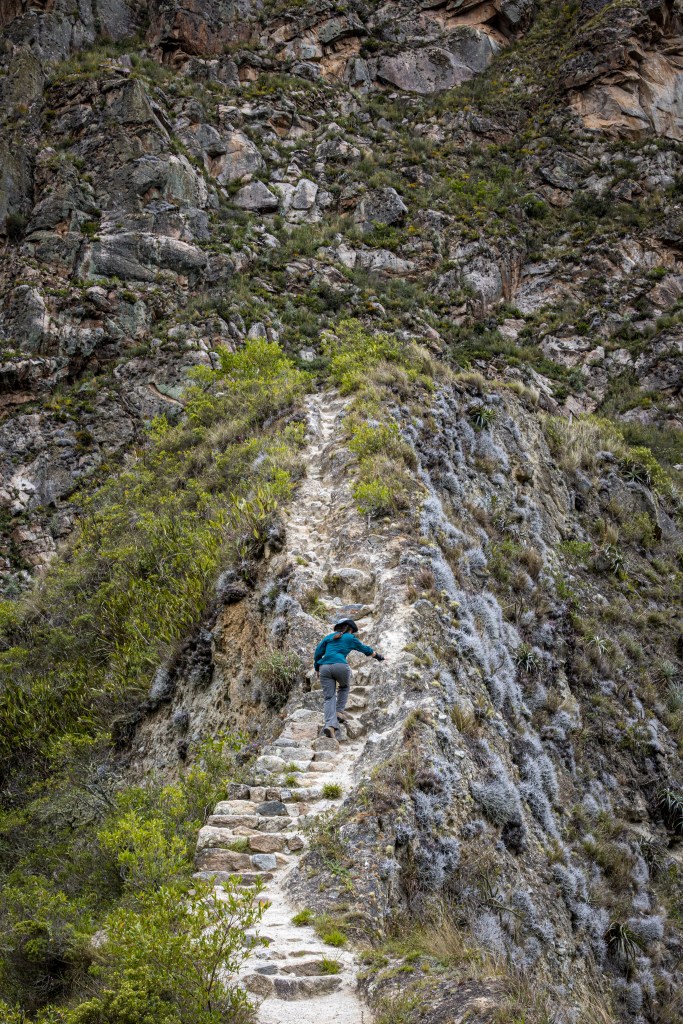
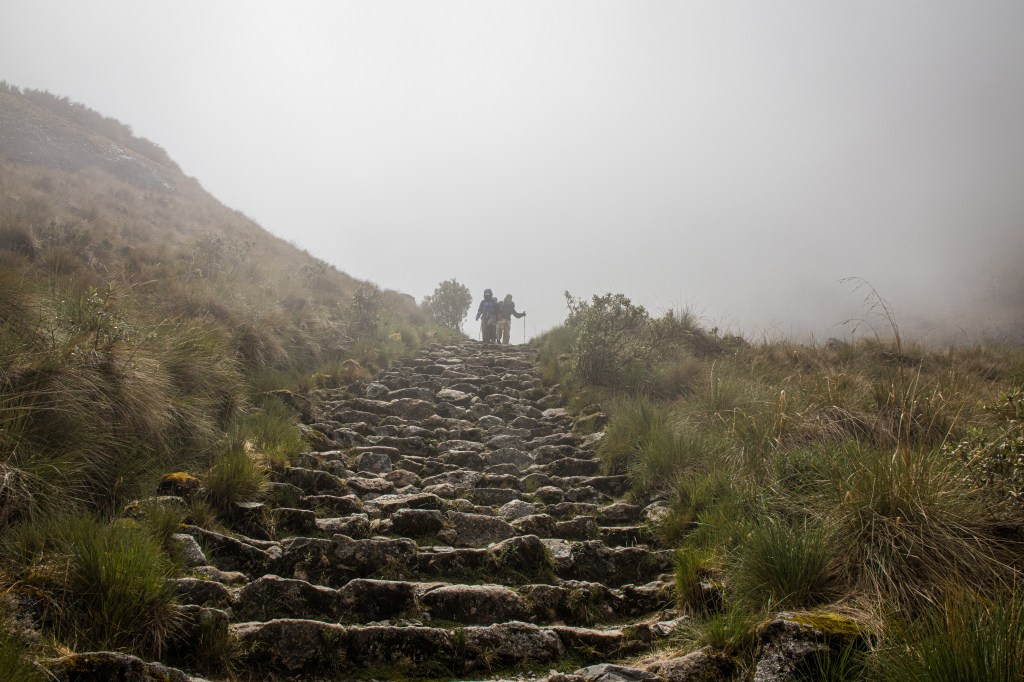
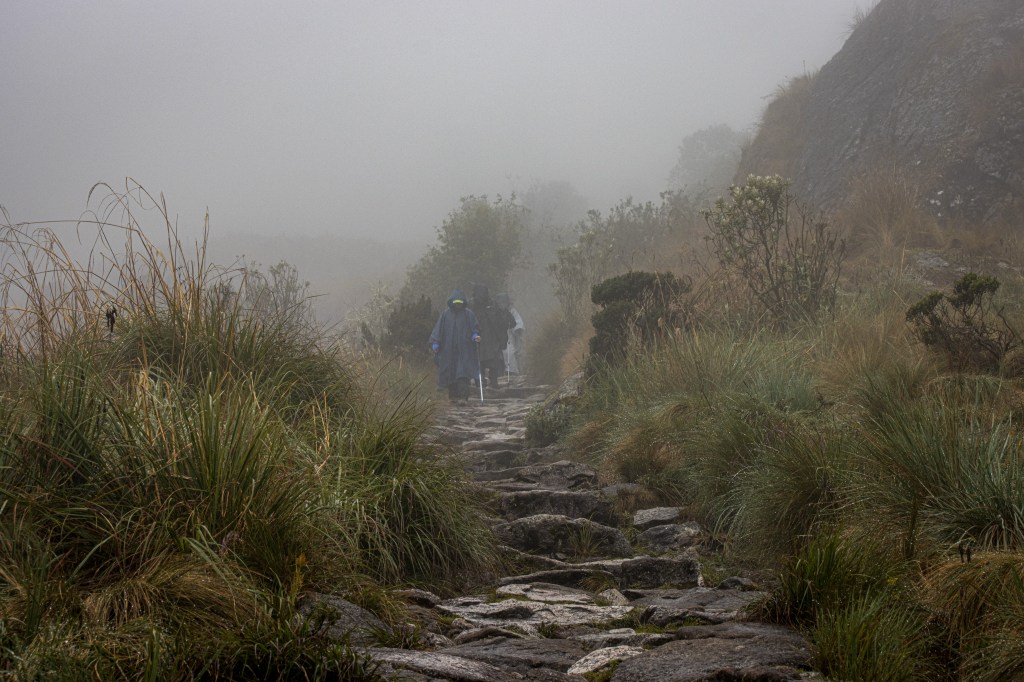
Day 2 was our big climbing day. We were up early, before 5AM, and after a big breakfast we were hiking by 6AM. The first pass is called “Dead Woman’s Pass”, named after a profile on the ridge, topped out at 13,780 feet. That was a 2,000 foot climb, and a lot of steps! The problem was that we then had to hike down about 2,000 feet to Pacaymayu only to climb another 1,500 feet back up to 2nd pass before descending down to our campsite at 11,800 feet. Lot’s of steps and lots of up and down but only about 7 miles so all in all not a bad day. Well, there was the rain of course that fell on us for most of the the afternoon …

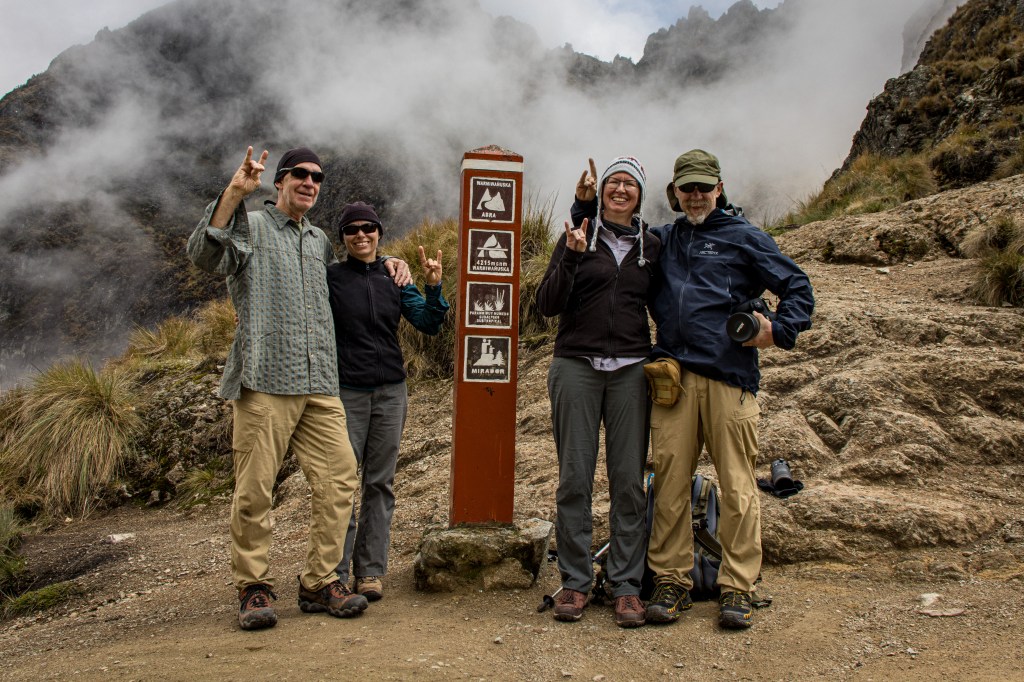
The intrepid explorers flashing the “happy llama head” hand signals at the top of Dead Woman’s Pass – and we thought we were done!
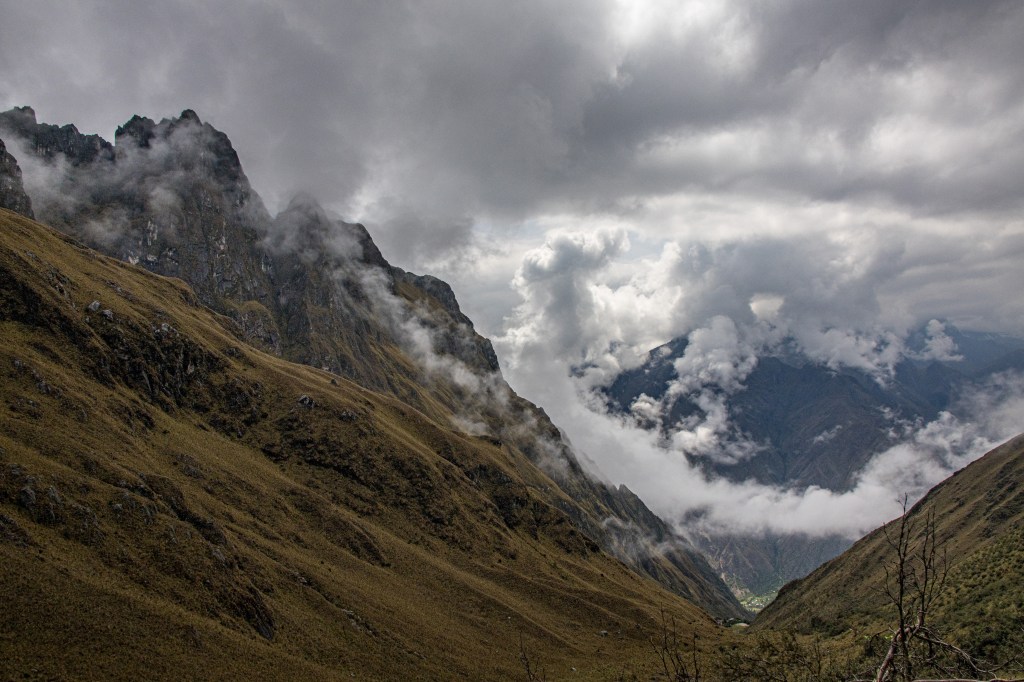
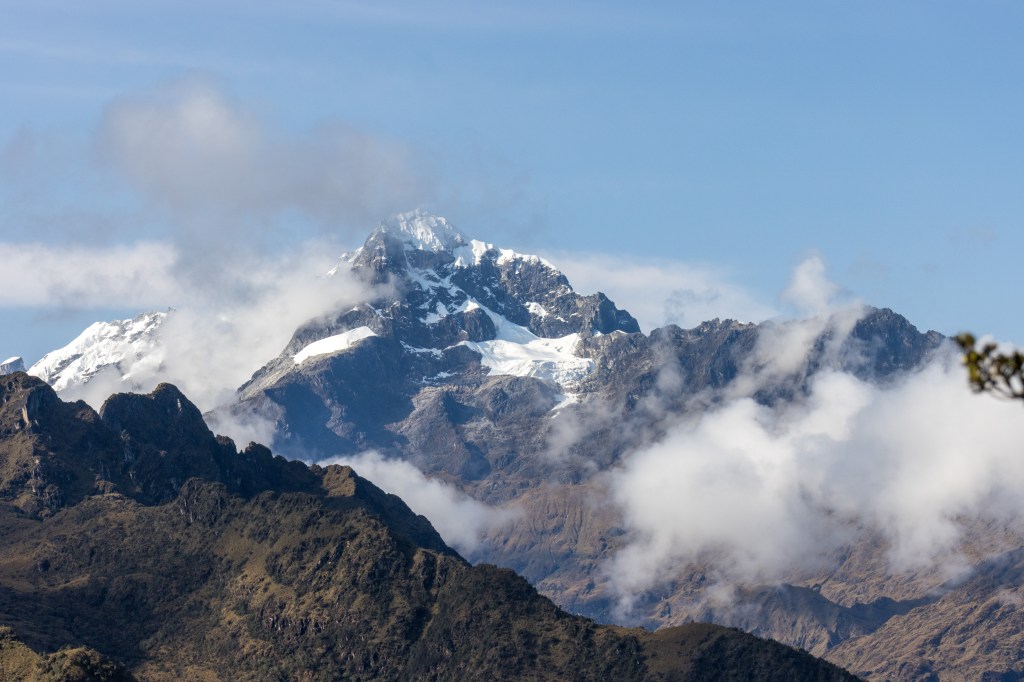
Looking down the way we came from the top of Dead Woman’s Pass – we started way down in that valley and off to the right another few miles.

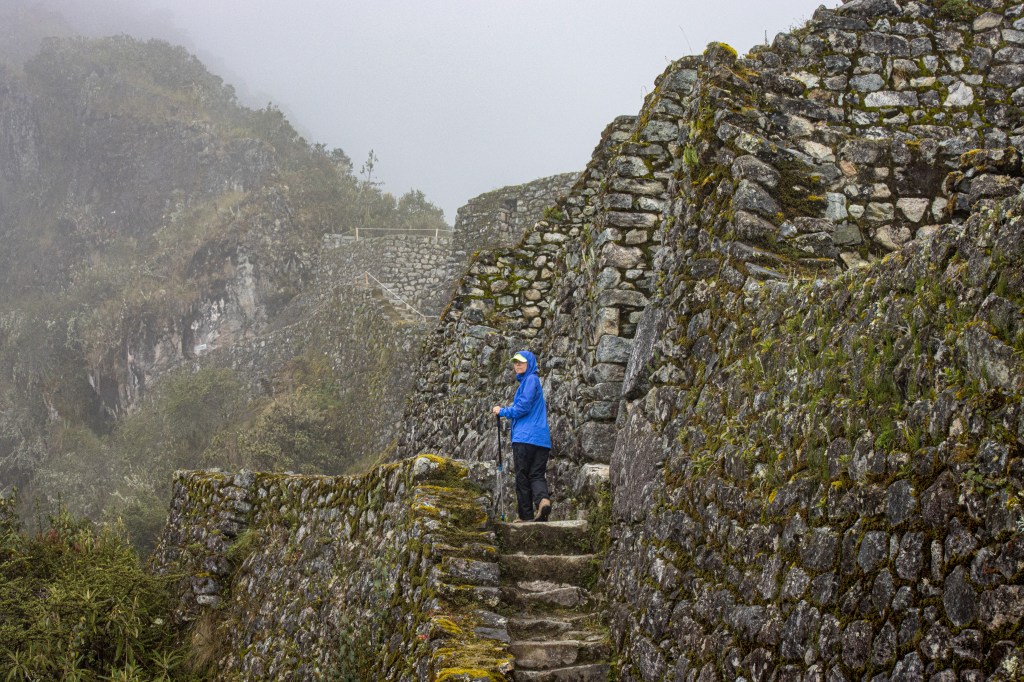
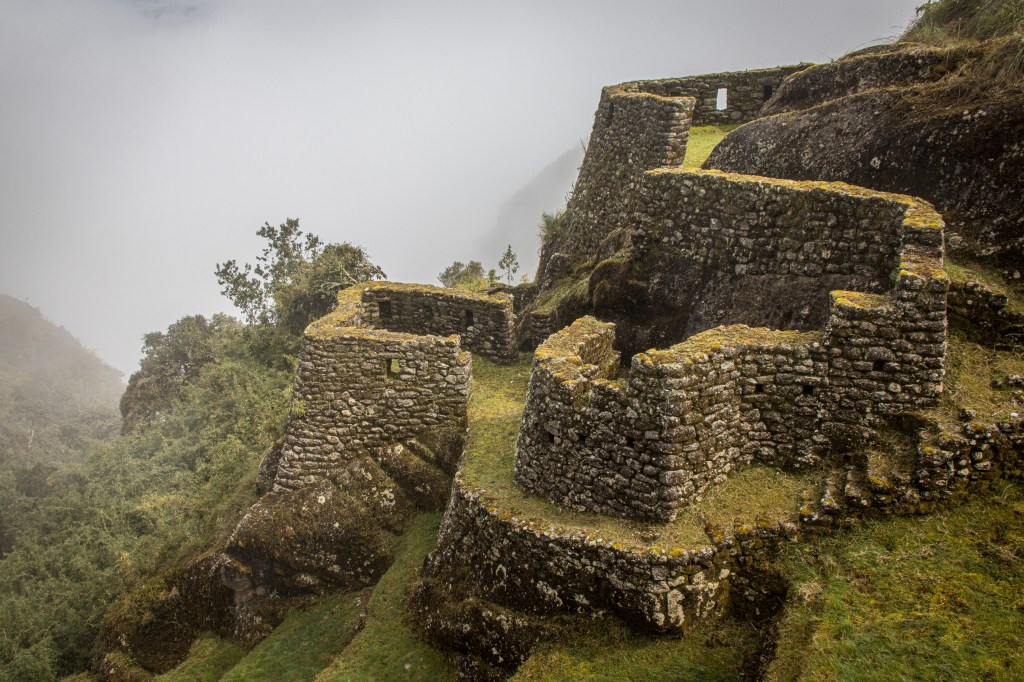
As I commented earlier, we passed through, or near, a lot of Incan ruins along the way. Pepe gave us his perspective on how the pieces tied together and, where we could, we wandered through the ruins to develop our own sense of life in Incan times. It constantly amazed us how there could be so much development in this remote and extremely rugged country.

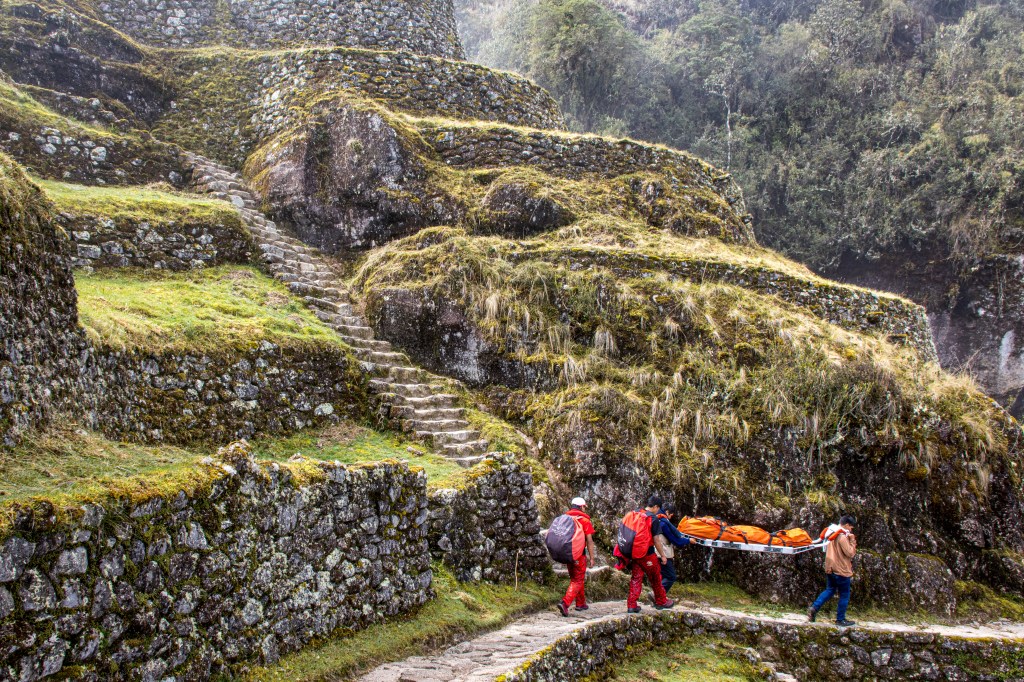
Our next, 3rd, morning was clear, bright and beautiful – a wonderful day for our next to last day on the trail. However, the gods of travel had a different plan for us. Sadly one of our party developed a nasty stomach bug overnight and couldn’t walk out. Luckily there are litters cached along the trail and the porters are familiar with carrying people out – things do happen and we weren’t the first to have problems.

Instead of doing the last bit of trail in 2 days, finishing with an early morning entry into Machu Picchu through the Sun Gate, we instead hiked the remainder of the trail, quickly, to get to some medical aid and an IV to administer antibiotics. So, we got to see the last 10 km of the trail in fast forward mode!

Porters carrying the litter out past one of the many ruins on the trail

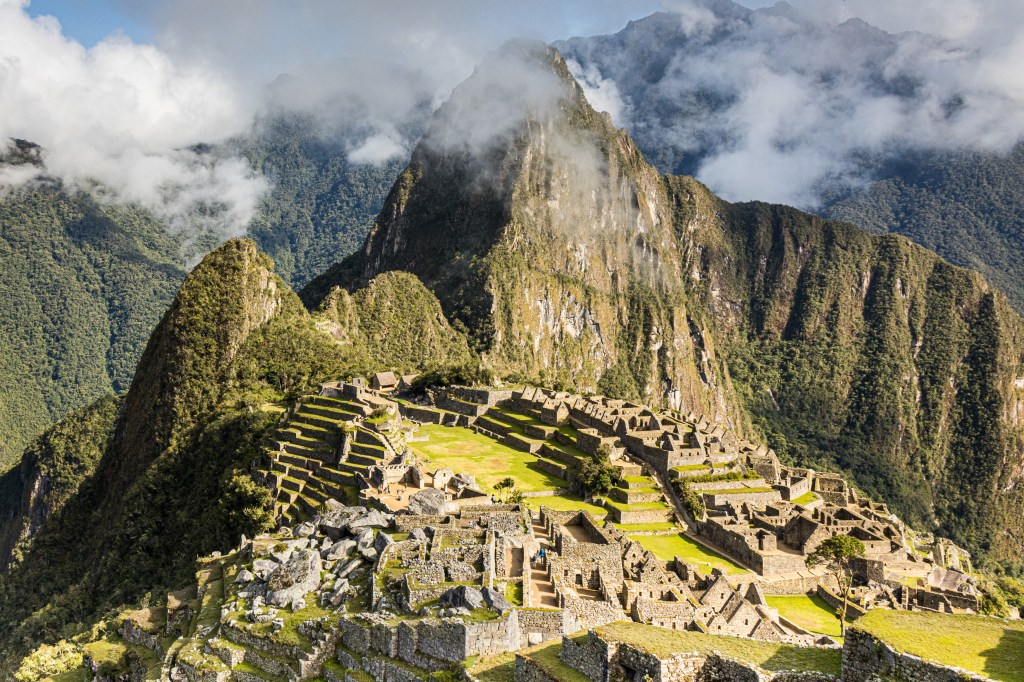
We did get to Aguas Calientes early that afternoon where a few IV bottles of antibiotic and anti-parasitic meds fixed the problem in surprisingly short order. They worked so well in fact that we were all able to go back up to Machu Picchu early the next morning to see this spectacular place. This is a UNESCO site as well as a “wonder of the world” and, after walking around and climbing above it is clear why. Even with so many people around it is still a spectacular place and well worth the visit – vale la pena!

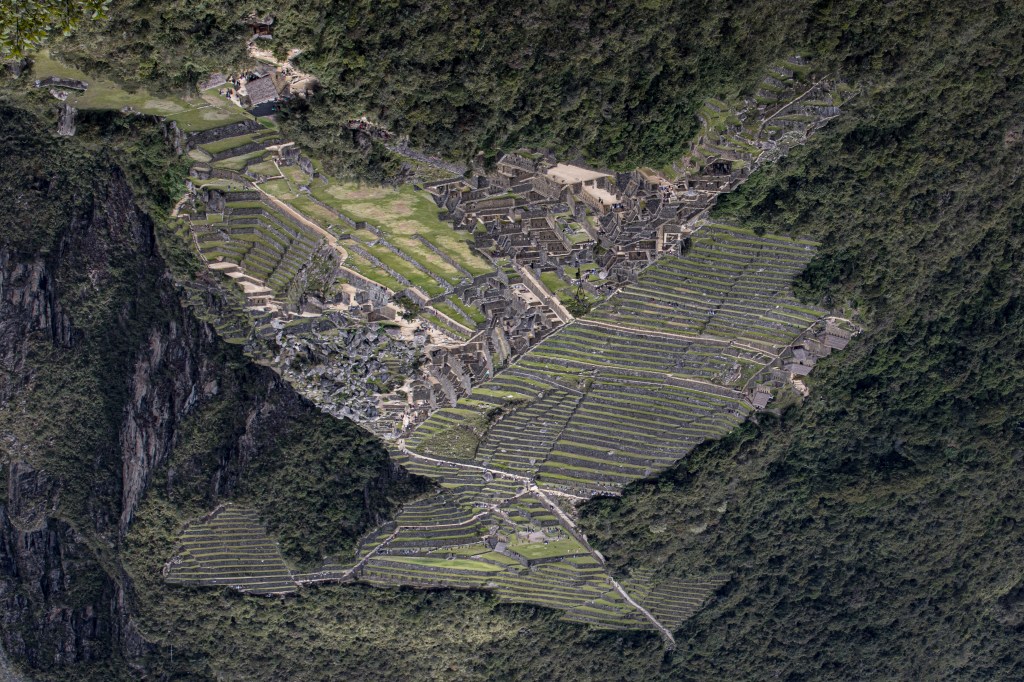
Mike and I also climbed up Wayanapicchu which is the mountain just behind Machu Picchu. It was very steep and had many, many more stairs but the view was spectacular. The photo below is from the top of Wayanapicchu though I have rotated it so you can see the shape of the condor for which Manchu Picchu is known – the head is lower left, tail is lower right and the wings rise above.

The condor image of Machu Picchu from Wayanapicchu

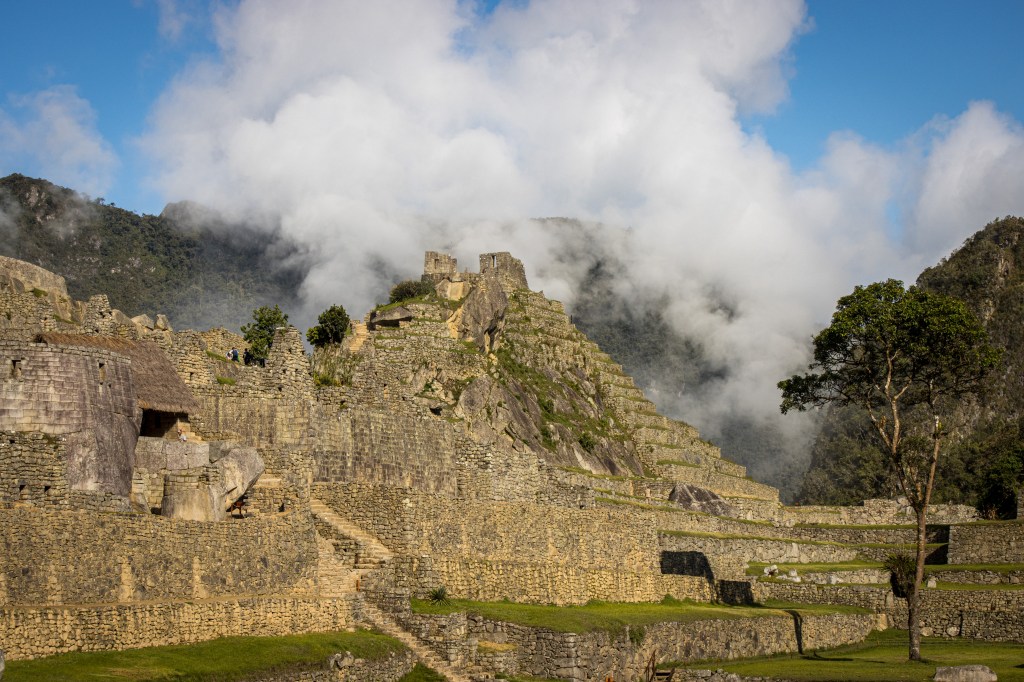
And finally, the iconic “Poster Photo” of Machu Picchu.

And now we’re off to explore Patagonia for the next 5 weeks or so. We hope to post some thoughts and images as we go into this next leg of our journey …

Vinicunca, El Valle Sagrada & Saqsaywaman

01-December-2019

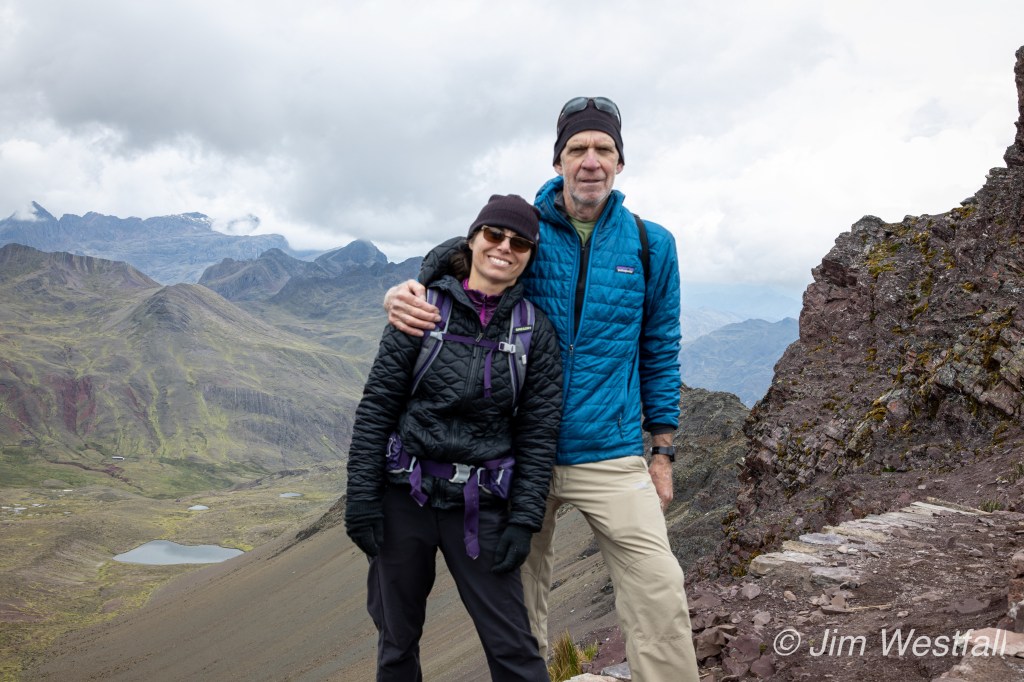
Susan and I high in the Andes near Vinicunca

It’s been a little bit since we’ve written but we’ve been pretty busy and there’ve been some complications, things in this part of the world don’t always run smoothly. We woke up a week and a half ago to find we didn’t have water, it seems a water main had broken. But, after 3 days we learned that the water folks had no idea where the broken main was and weren’t sure when it would be fixed so, we decided to move to a new apartment. We found a place that’s even closer to school, closer to a couple Of the supermercados we like and easier to catch cabs to head into el Centro.

Looking at the infrastructure that we can see, like the internet connections in the photo below, if the water mains are anything like this they might still be looking for the break!

It’s no wonder the internet is so slow here, I’m not sure how the signals are supposed to find their way through this jumble …

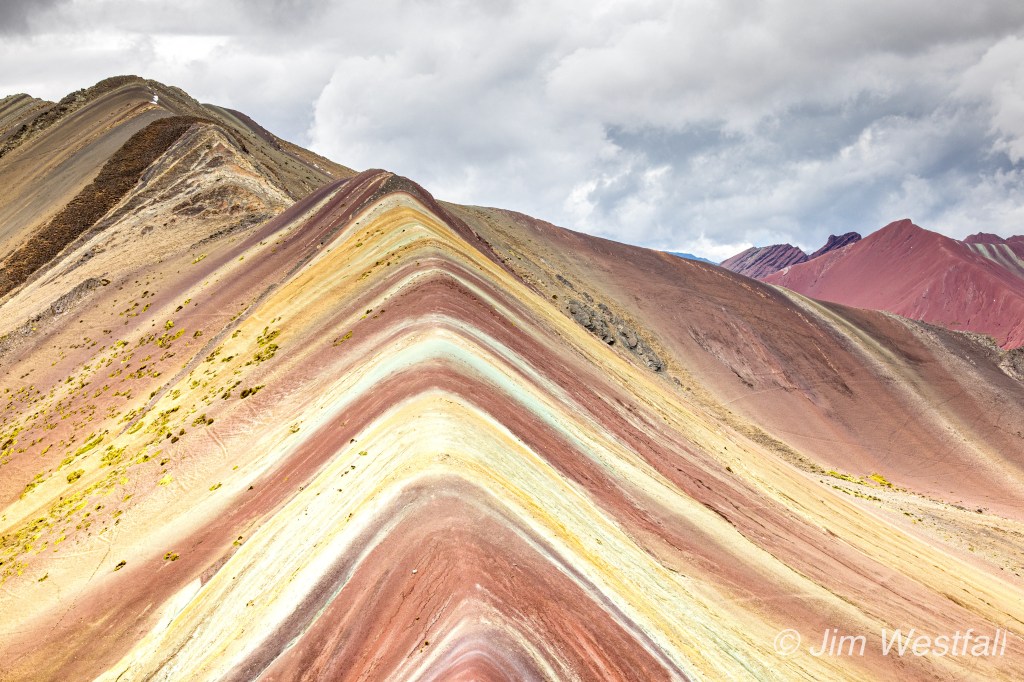
Vinicunca – La Montaña de Siete Colores

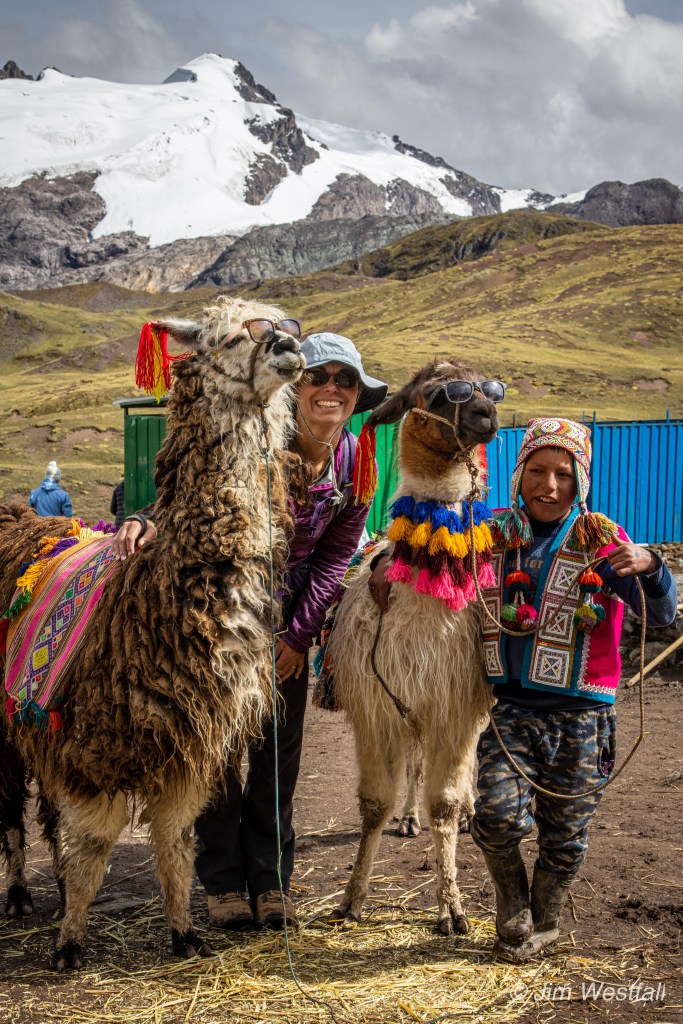
We moved a week ago Sunday but on that Saturday we took a tour to La Montaña de Siete Colores, also called Rainbow Mountain. The trip started early. We left our apartment at 4:00AM, met our group and guide at a hotel in el Centro then drove up to the mountain. It was a fun group and there were a dozen other people with us – a handful from Mexico, a few from Peru and a couple from Italy.

The hike wasn’t long but we started hiking at about 16,000 feet in elevation and we topped out at about 16,500 feet. That’s about 2,000 feet higher than I’ve hiked before and I was surprised, and pleased, that it really wasn’t so bad. Yep, I could feel the altitude but of our group, Susan and I were surprised that we were the first to get to the top. It was some effort but, as they say in Spanish, “valer la pena” it was worth it!

Here are a few photos from our hike …

One of the very colorful ridges of La Montaña de Siete Colores
After hiking down a ways we hiked back up another trail, at well over 16,000 feet this seemed crazy, so that we could see into el Valle Rojo. I won’t claim it didn’t hurt a little to be climbing up again but the views were spectacular!

El Valle Sagrada – the Sacred Valley of the Incas

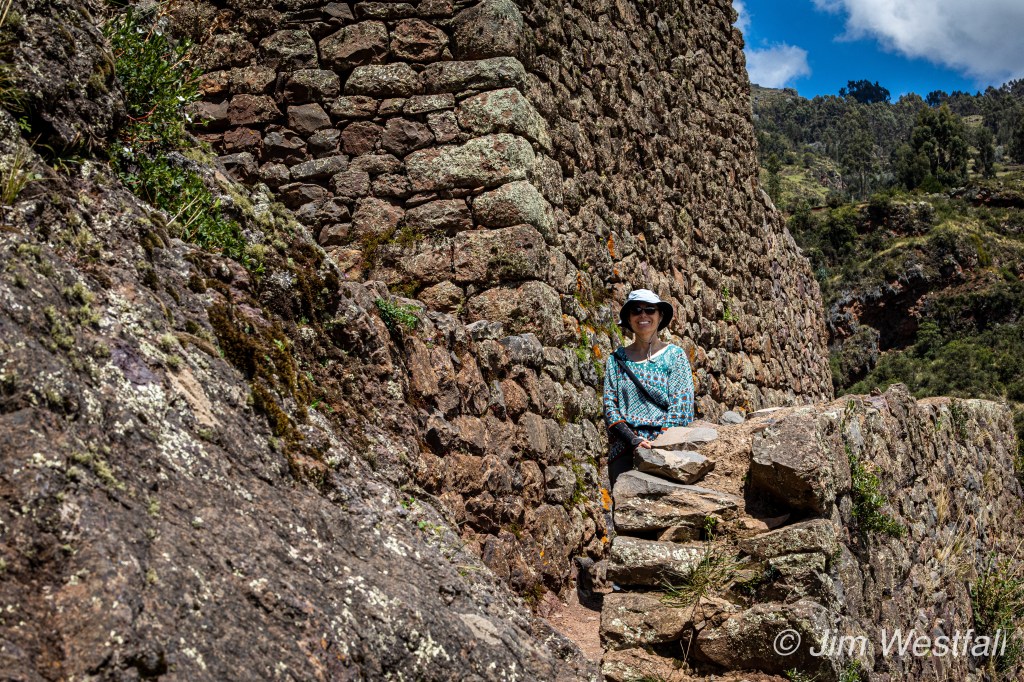
This weekend we took a tour into the Sacred Valley of the Incas. We have our 4 day hike into Manchu Picchu coming up in a week but we decided to take the easy way out and do a tour bus through the Sacred Valley to see a few of the larger ruins. During Inca times, before the Spanish invaded this country, the valley was a bustling hub of activity with farming, mining and, apparently, building temples being some of the main efforts in the area. We stopped and spent time walking through the ruins of dwellings and temples at Pisac and Ollantaytambo, we stopped for lunch in the village of Urubamba and we visited a village where they raise alpaca and produce textiles from their wool.

While the remains of the Incan ruins are spectacular as they stand, you do have to use your imagination to visualize what was there before the Spanish destroyed them to erase their “pagan” symbolism.

It was interesting to hear though how some of the Inca traditions were blended in with Catholicism to try encourage the native people to participate in the church. The guide for our Rainbow Mountain hike and the guide for our Sacred Valley hike both talked a lot about the Incan beliefs, Incan society and social structure and the impacts the European invasions had. We picked up some interesting perspective on Incan and Peruvian history along the way!

And again, some photos …

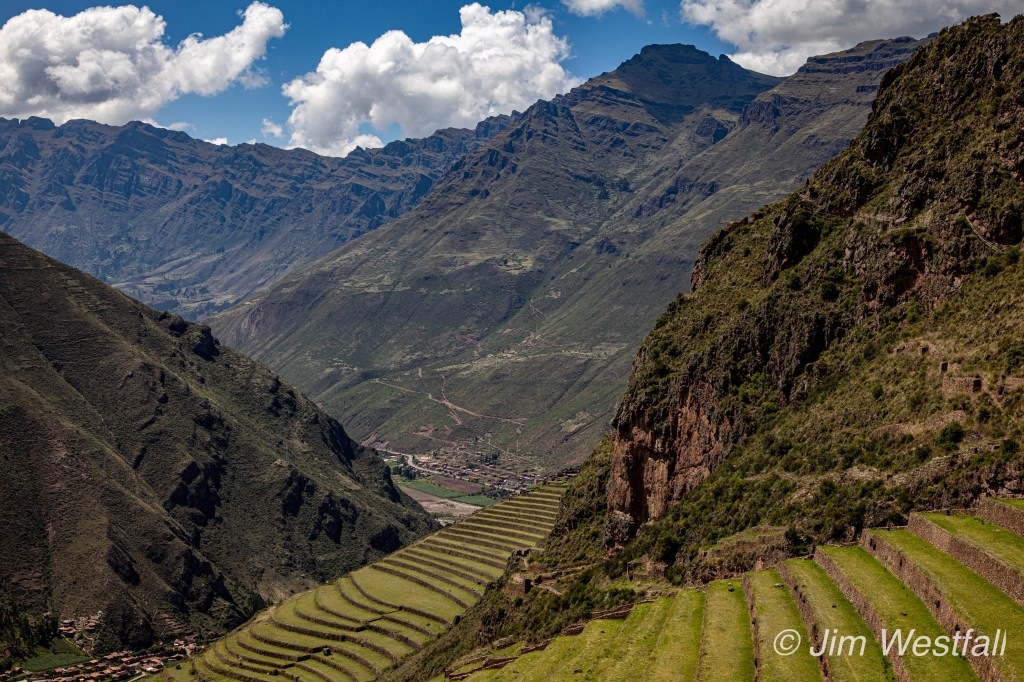
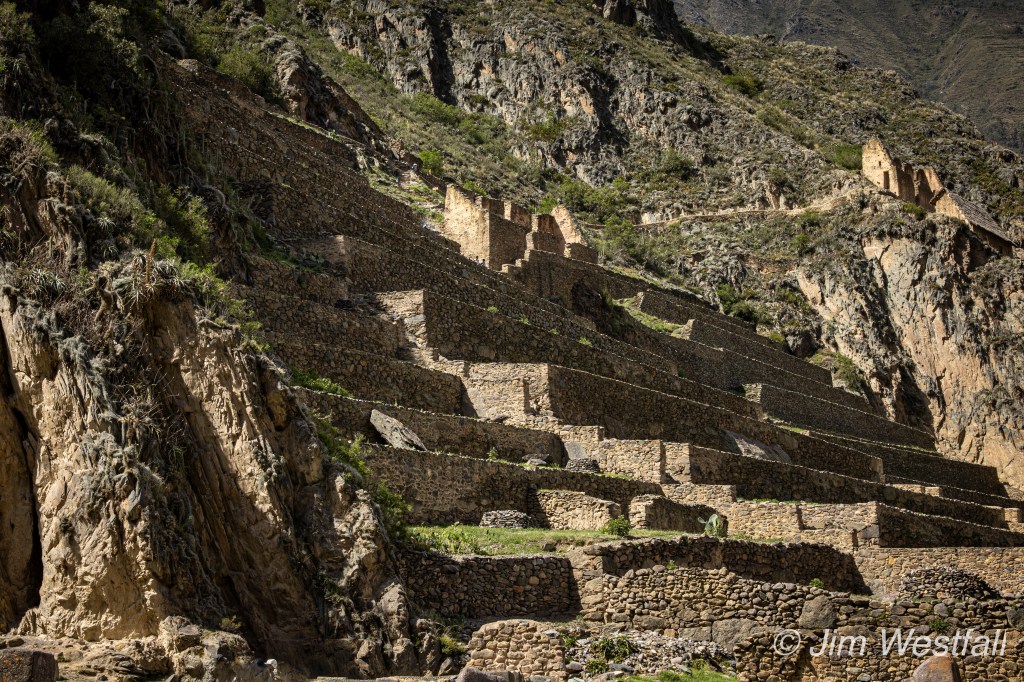
Looking down from the Pisac ruins into the Urubamba River valley where the present day town of Pisac sits. The terraces were built by the Incas for agriculture, mountain side stabilization and defense – the walls are tall!

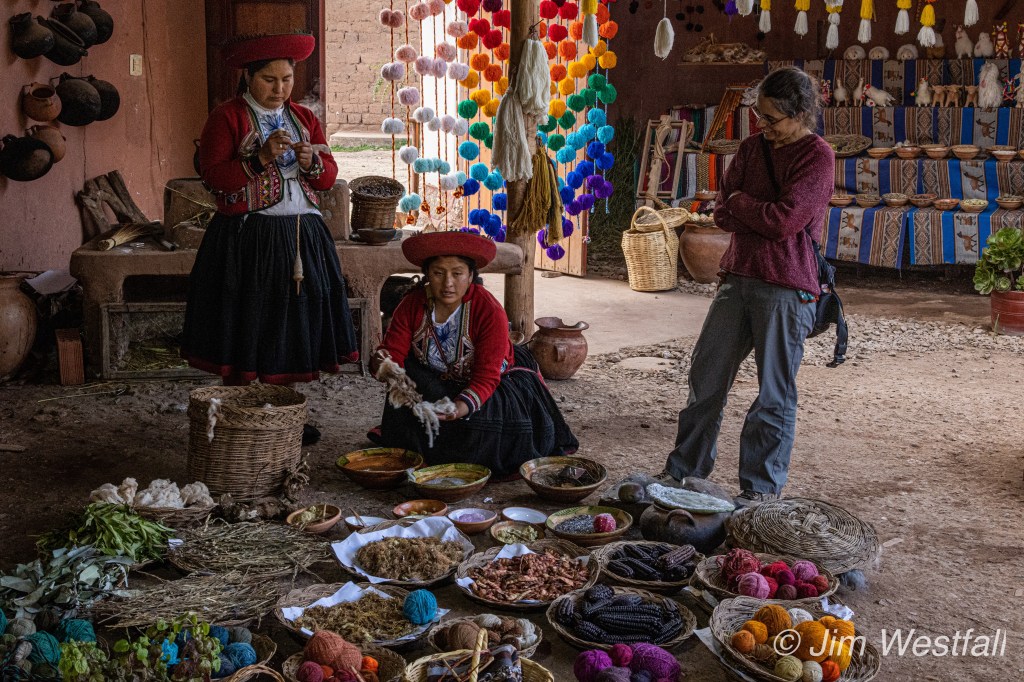
Our last stop was in Chinchero where there are some ruins but what was more interesting was a communal weaving and artisans cooperative. The women working there, though the real weaving and tinting of alpaca wool is done in their homes, showed us how they clean the alpaca, dye it with plant, insect and mineral dyes, and then weave it into pretty amazing textiles. It was well worth the stop.

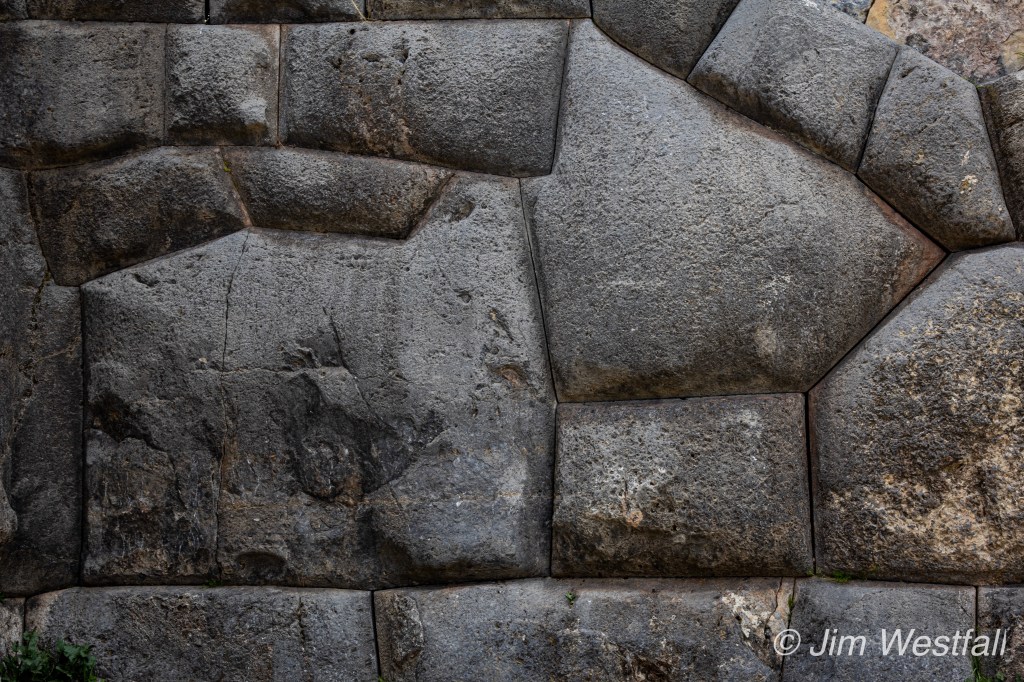
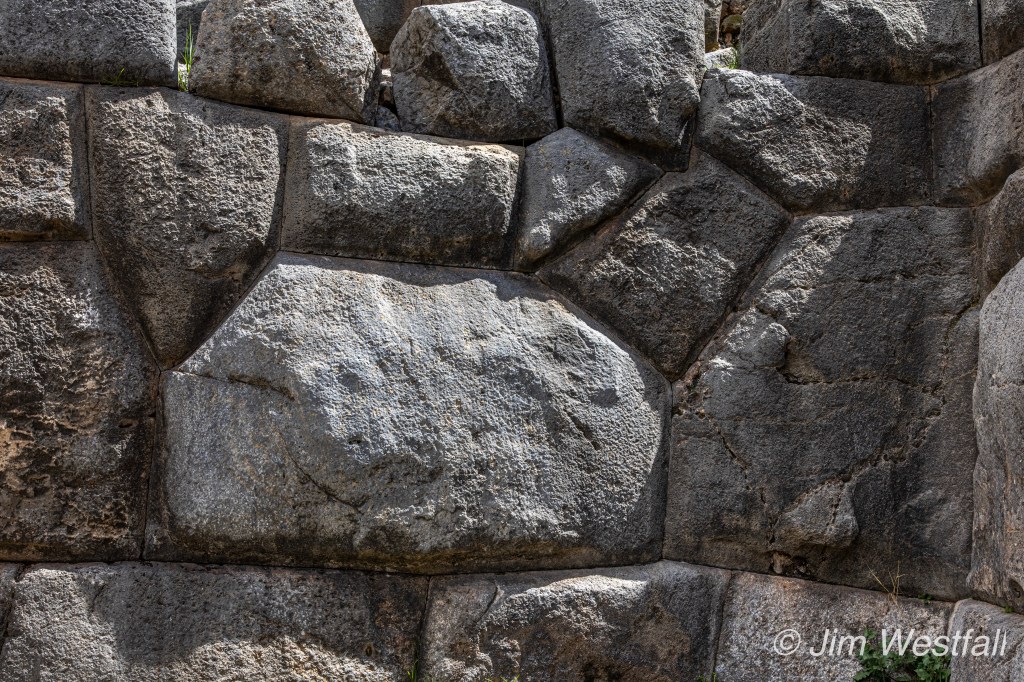
Today we explored Saqsaywaman and a few other sites closer to home. Saqsaywaman is pronounced like “sexy woman”. We took a cab up to the top of a series of ruins high above Cusco then walked back down into town. About a 7 and a half mile walk but all downhill – over 1,500 feet of downhill. Once we got down to Saqsaywaman, we connected with a guide giving tours in the area and were very pleased that we were able to interact with, and understand, her tour which was entirely in Spanish. We’ve found with the guides that while they can do their thing in English, they would prefer not to. Having all these interactions in Spanish has helped us move our Spanish conversational abilities along quite nicely!

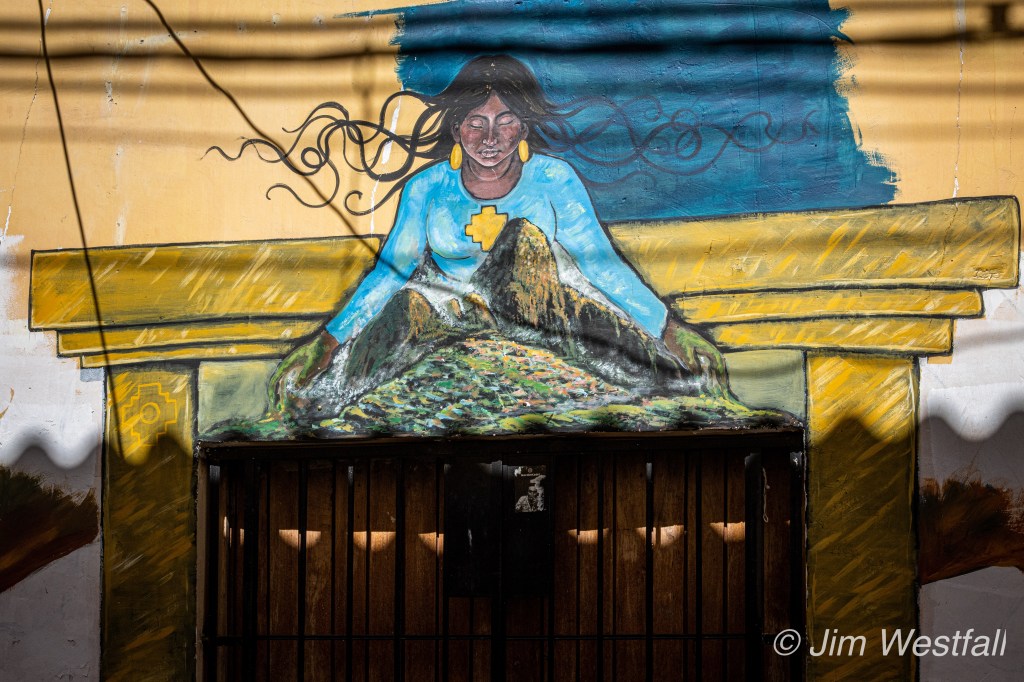
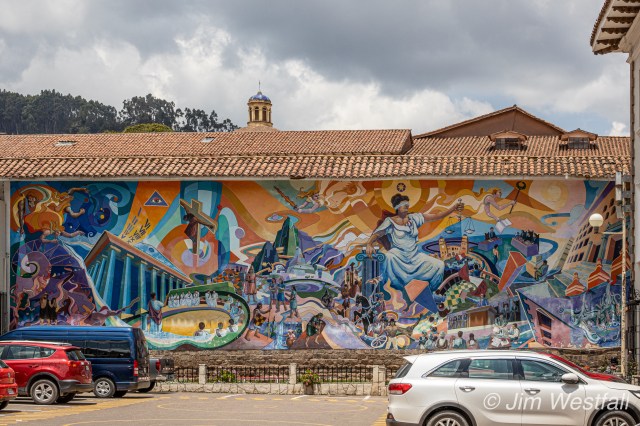
As we were walking back into Cusco, I saw this painting, over a door along the road, of Pachamama, Mother Earth, who was one of the 3 principal Inca gods. This painting seemed a fitting bookend to a nice day immersed in the ancient world of the Incas.

Where in Cusco is our Apartment

20 November 2019

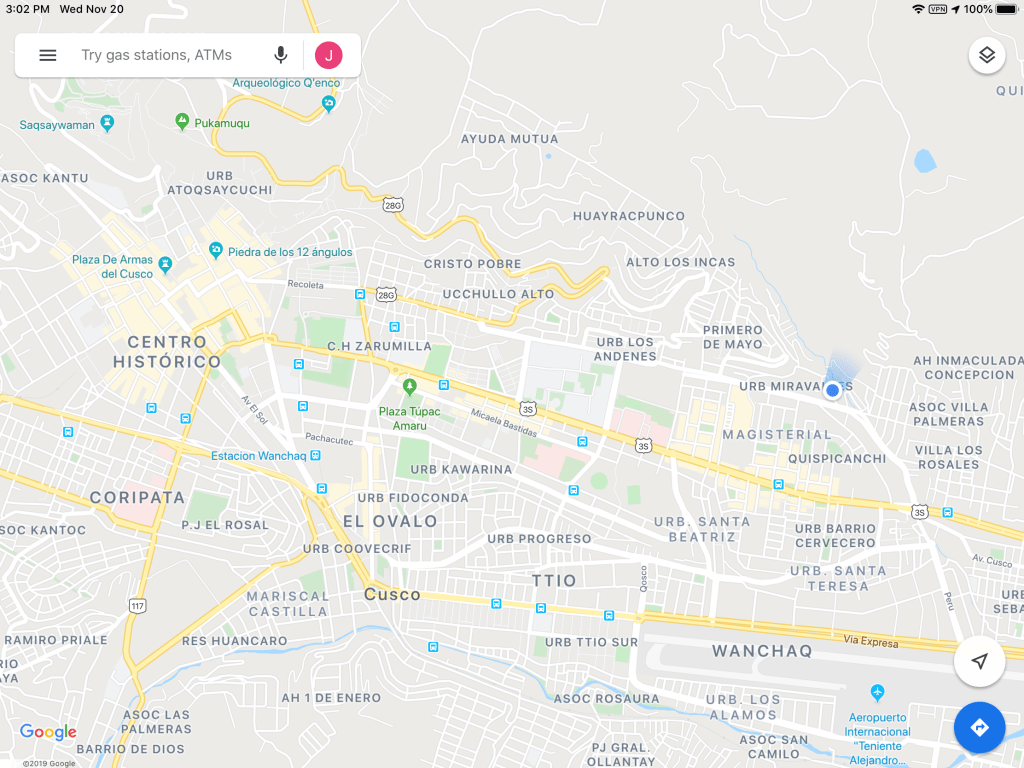
Betsy just asked where, in Cusco, is our apartment located. If you search “Google Maps” for Urbanización Covipol in Cusco, “the Google” will get you to less than 100 meters from our flat. The little blue spotlight on the right in the map below is our flat.

The majority of the interesting old stuff, and where the tourists mostly hang out, is off on the left side of the map in el Centro Histórico. Most of the nice hotels and good restaurants are over there too. We chose this side of town because it’s less than a 10 minute walk from our language school. To get to el Centro, we have walked and taken the local buses. The buses always seem to be jam packed and I doubt they ever see much of a cleaning. However, they run every 5 minutes or so and they are cheap – .8 S/, or About 25 cents.

I wish our bus service was even partially as good. Just about everywhere in the world that I’ve travelled does a much better job at mass transit than we do in the States!

Images around Cusco

19 Nov 2019

We’ve started our Spanish classes and are finding that we have a lot less time to wander – we’re in class for 4 hours and homework, la tarea, is taking another 2+ hours of our afternoons. So, between homework, cooking, napping and wandering off to the supermercado for groceries, our days are full. The downside of this is that we’re going to be doing most of our exploring on the weekends for a while.

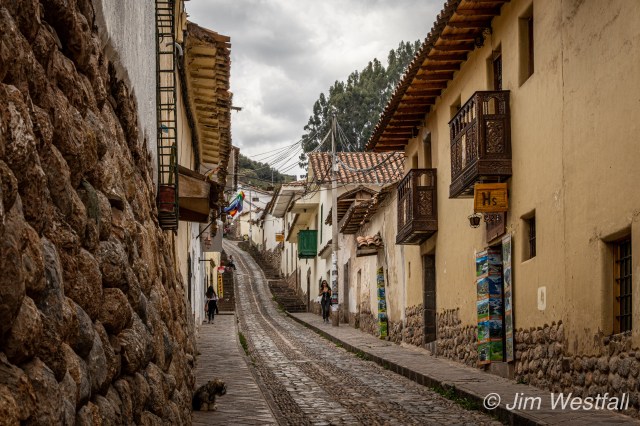
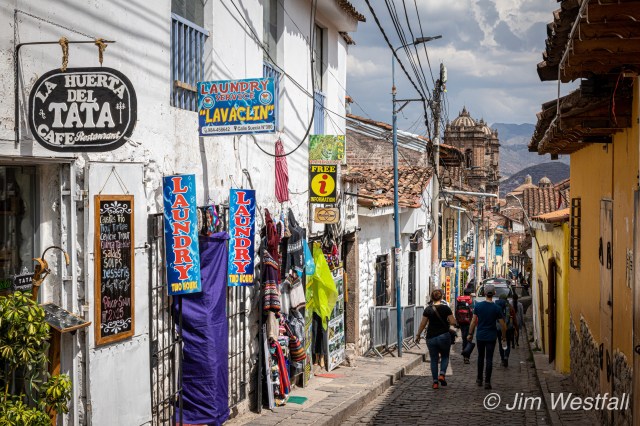
We did get out for some exploring last weekend and I had a chance to take a few photos. Here are few sights from around the city from last weekend.

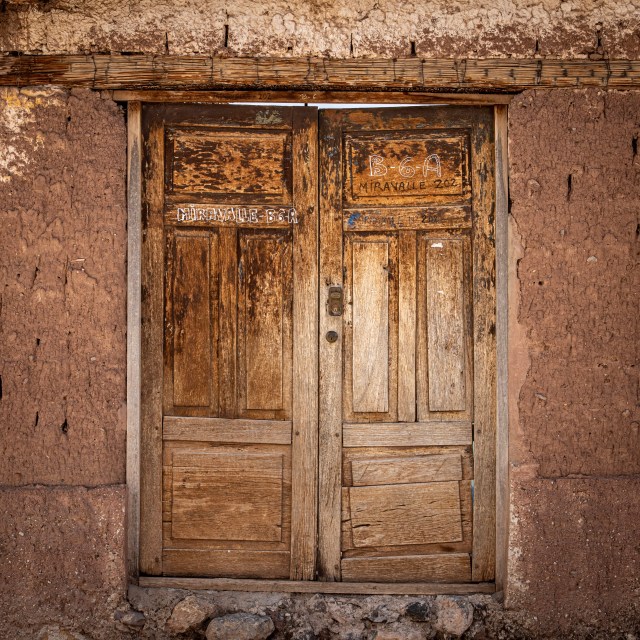
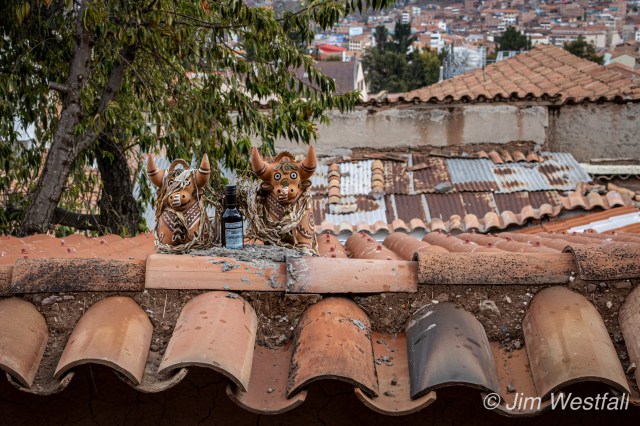
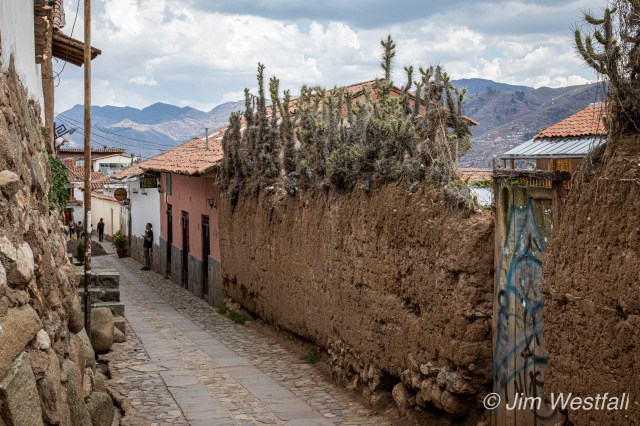
One of the neighborhoods near us has a mix of construction including newer poured reinforced concrete but there is also a lot of old adobe used in the construction of some of the garden walls and house walls. I really liked this old weathered wood door and lintel in an adobe wall. I’ve seen a few of these throughout the neighborhoods.

There are also a number of stuccoed adobe and stone houses like these looking over the city. This is not a very affluent part of town, largely a poorer area, yet the views from the hillside are spectacular!

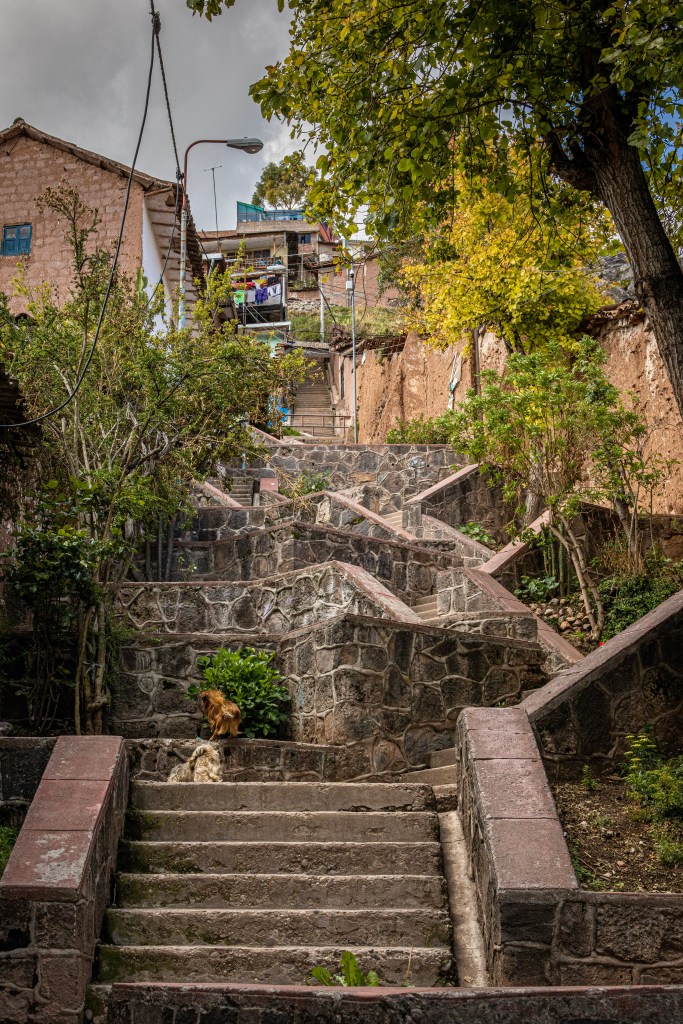
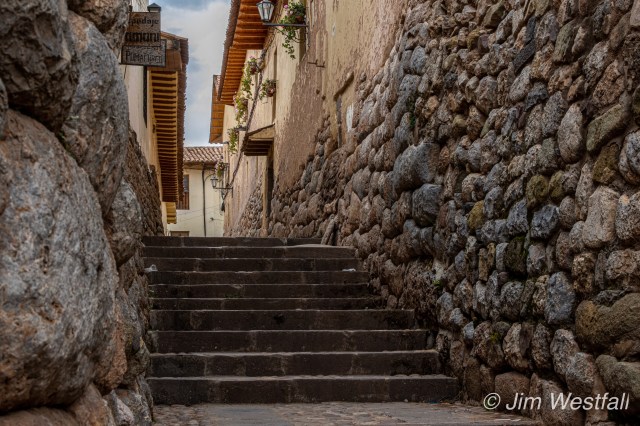
Throughout the hillside neighborhoods of Cusco we’re finding that there are stairs that allow pedestrian traffic to go straight up the hills while the roads switchback and wind their way up. Some of the stairs are just steep and painful but some, like this one, are steep, painful and very pretty too.

On Sunday we took a bus from our apartment to the Centro Histórico. It was crazy busy down there but we had some good people-watching and we visited a few of the big markets. We stuffed our backpacks with produce at el Mercado San Pedro. The markets, while different in certain ways, reminded us of the markets in France that we’ve missed so much. We will get back and get some market photos later but here are a few shots around el centro. Though it’s a journey with some walking and busing to get there, we’ll do vegetable shopping at San Pedro this coming weekend.

We found a winter squash in the market called zapallo. They are huge and probably weigh over 50 pounds each. The vendor cuts out a hunk as big as you want and we bought a kilogram. I made enough of a fabulous soup with the squash that we were able to have it for a couple dinners. We’ll be back for more!

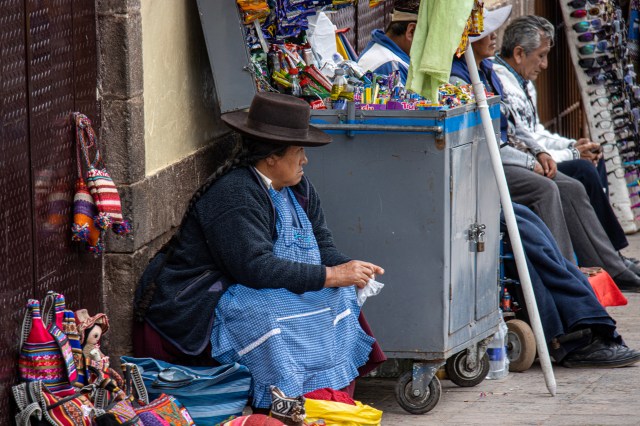
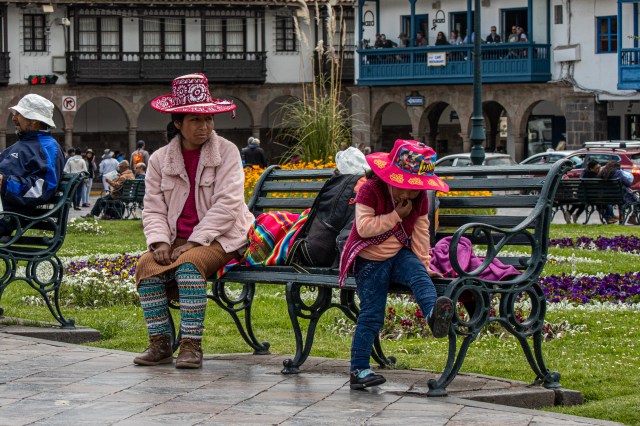
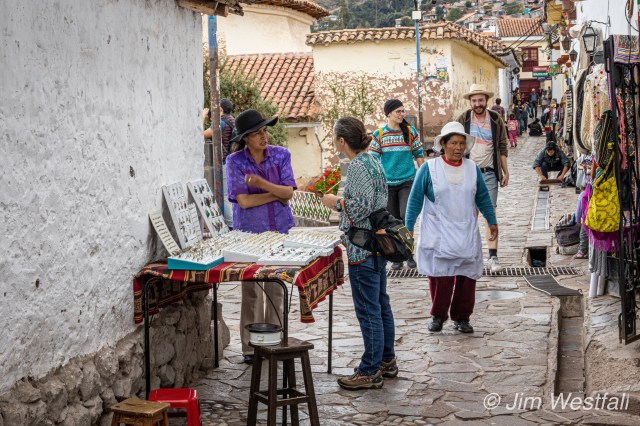
Some of the Andean women really do dress as colorfully as the photos that we’ve seen for most of our lives. The women on the left has a small stand selling trinkets on the street. The woman on the right was sitting in the Plaza de Armas, with her two children, one of whom was bundled up, just apparently enjoying the day.

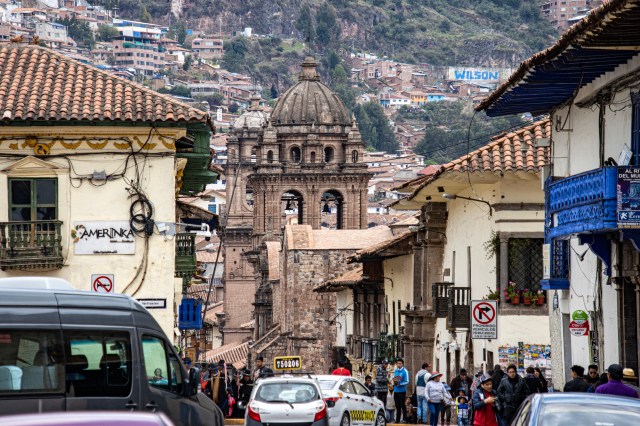
And finally, a shot through the street towards one of the many cathedrals in the Centro Histórico. I don’t know if it’s this busy every Sunday but between people and cars it was very busy when we were there. There’s quite a difference between our quiet neighborhood and the center.

We did walk into one of the cathedrals to look and it was quite ornate. It didn’t have the elegance of the cathedrals in France but it did sparkle. As we have time, we’re looking forward to exploring them more.

Nerd Alert

Camera kit and photo processing for this trip

17 Nov 2019

We all know that I like to point cameras at stuff. The ratio of my good shots to my total shots taken might be really, really low but I don’t let that stop me. So, I of course brought camera gear on this trip, but we’re trying to travel light, living out of a backpack each on our 10 week trip.

A few years ago we took a trip to southern Costa Rica where the limits for the weight of our luggage was so tight that I worried I might have to leave clothes behind and only take camera gear! Luckily you don’t need much in the way of clothes in southern Costa Rica where the weather is always nice.

That’s not an option in the mountains of Peru or along the Carretera Austral in southern Chile. I need a enough clothes to stay warm and dry (we’re learning it rains a lot here in Cusco – it is raining as I write this), so the camera gear I brought had to be light as did any computer I brought to run Lightroom/Photoshop for post-processing.

So here’s how I solved the problem of going light but still being able to take acceptable photos, do some limited post-processing and sharing them here and on FB so you can follow along on our trip in South America.

My light-weight Camera Kit

First, I wanted a camera with a crop sensor to help reduce the size of the body as well the size of the lenses I’m carrying around. I also wanted to stick with an interchangeable lens camera so, even though there are some really nice point and shoot travel cameras out there, I’ll have more flexibility if I carry a few lenses.

There are some really good options out there, with Sony and Olympus at the top of the list, but I’m currently pretty heavily invested in Canon glass so I stuck with that. Canon helped me out here with their recent introduction of the EOS M6 Mark II which is a significant upgrade from the previous versions of the EOS M.

Camera Kit List

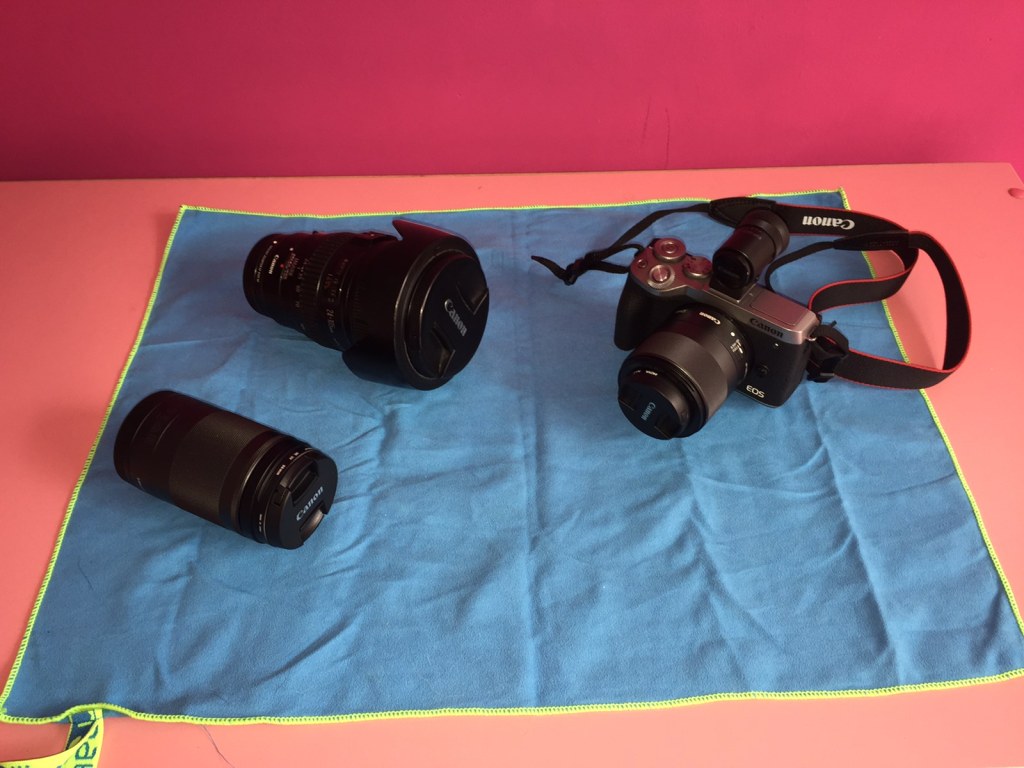
  • Canon EOS M6 Mark II – small and light mirrorless 32.5 Mega-pixel body – I’m also using the EVF-DC2 hot-shoe mounted electronic viewfinder with this rig
  • EF-M 32mm f/1.4 prime lens – it’s small and fast so this is my everyday walking-around lens
  • EF-M 18-150mm f/3.5-f/6.3 – relatively small telephoto but not very fast
  • EF 24-105mm L-series f/4 – this is my one concession to a bit more weight but it’s a higher quality lens and relatively fast of the zoom range (Susan here… really, he brought 3 lenses? That is why I had to carry a few of his things…)
  • EF to EF-M lens adapter so I can use the EF 24-105mm
  • Gitzo GT-0541 carbon tripod – this is a really light, and not exceedingly stiff, tripod that works fine with a light camera – using the M6’s electronic shutter, instead of the mechanical shutter, eliminates vibration improving the performance of this light tripod setup
  • Really Right Stuff BH-30 ball head – again, like the tripod, this is pretty light gear but for my light travel setup it works well
The EOS M6 and and lenses I’m using and yes, the walls in our second bedroom really are painted that color

Post Processing without a “computer”

On a lot of trips I carry a laptop which provides more computing power but is heavy to pack around. My typical setup would be a MacBook running Adobe Lightroom and Photoshop. However, to get the weight and size down I decided to try using Lightroom Mobile running on an iPad.

Apple has recently made this a lot easier with iPadOS which now has a little better file handling capabilities, than previous versions of iOS, and can read and upload files from external media – SD/CF cards, memory sticks and even external hard drives. Using the improved file handling I’m able to read the camera card and upload the images into files on the iPad. I’m also able to copy files from the camera’s SD card to an external CF card for backups.

This is better than it was in previous versions of iOS but it’s not as easy as working on a computer. We’ll take baby steps though and this is heading in the right direction.

What would be nice would be if I could read files directly into Lightroom from the camera’s SD card. I don’t know if it’s Apple’s fault or if it’s Adobe’s fault but right now that capability doesn’t exist. So, my flow is to copy my image files into a temporary folder on the iPad then copy those image files into my archive folders in Lightroom. It sounds cumbersome but I’ve gotten so that it’s pretty quick, especially if I deal with it daily.

Archiving and Post-Processing List

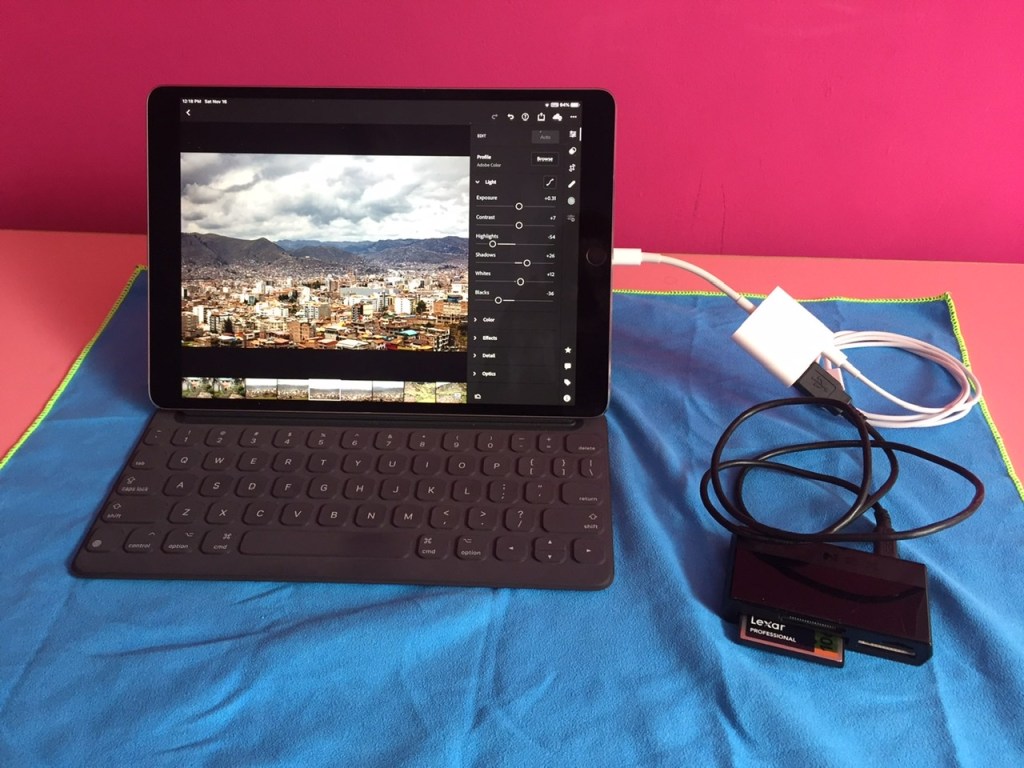
  • iPad – 10.5” iPad Pro
  • Apple Smart keyboard
  • Powered Lightning to USB adapter
  • Card reader – reads both SD and CF cards
  • Adobe Lightroom Mobile
10.5” iPad Pro, Smart Keyboard, adapter and card reader

In general, Lightroom Mobile is working great and the iPad has enough processing power to make a first cut at the images. I think the only things missing from LR Mobile that are Available in LR Classic are the capabilities to merge HDR images and to merge Panorama images. I can live without those here and who knows, Adobe might add them in one day.

Archiving isn’t as clean as in LR Classic but I’ve created a system that is working for me. In LR, I’ve created folders for each of the regions where we’ll travel. Then, in each of those folders, I create a gallery that is named by date. So, the general structure looks like:

LR/Shoot-Name/Date/<images>

This archive approach matches what I do in Classic and it works well for me.

That’s it and I promise, maybe, not to do that again …

Questions and Comments are welcome

Cusco

14 November 2019

View from our apartment in Cusco Peru – the Kallachaka ruins are on the hillside in back of us

After a very long day of traveling, we landed in Cusco. It took us about 24 hours which included getting in about 4 hours of sleep on a bench in the Bogota airport. We caught a cab to our apartment, walked to a supermarché to stock up on food and essentials, took some time to cook rice and lentils at altitude, then slept for much of the next dozen or so hours. Today, we started exploring!

We visited our Spanish school today and took written and oral placement tests – this was pretty quick and easy since we rapidly got to the point that we had no clue what the test was asking. That’s why we’re here isn’t it – to learn how to get farther into the test! It turns out that this is the “low season” here in Cusco, and at the school, so there will only be one other student in class with us. This is going to end up being 3 weeks of essentially private lessons so if we don’t learn much, then I think we’re unteachable …

Susan and I like to walk and we’ve been told that we have “a walking problem”. So, we spent the rest of the day walking and exploring Cusco. We got down to the historic town center, at the Plaza de Armas, and up into the San Blas neighborhood. Both were good but San Blas was not as crowded with other tourists, and the hawkers more intent on peddling their goods stayed down at the Plaza, so it was more enjoyable. We did find a very nice vegan restaurant, Chia Vegan Restaurant, near the center – Centro Histórico.

Going back to the hawkers, the nice thing is that they provide random opportunities to practice speaking Spanish. Even though it’s crowded down there, I think we will wander back because, along with the opportunities to talk to strangers, there are a lot of good restaurants and, heaven forbid, we might even buy some stuff – algos cosas turisticas.

… and a few photos …

In San Blas Susan is negotiating with a street vendor for a simple gold (OK, gold colored metal) ring. For a bunch of reasons, traveling with her wedding ring can be worrisome, so she picked up a simple band as a stand-in.

Cusco is over 11,000 feet and I was expecting that walking up and down and over town might be more wearing than it turned out to be. I guess that living in Colorado, and spending as much time as we do hiking in the mountains, actually keeps us in pretty good shape after all!

We don’t have classes until Monday so we have tomorrow and all weekend to explore the city. This is a walkable city, which is good because we don’t have a car. As we have been walking around, we have said many times how good it was that we weren’t driving; there seems to be a lack of signed streets, so even walking we get turned around frequently. Turn signals seem to function in vehicles here, but so do horns, which we heard enough of without them being directed at us. It looks like there are lots of buses and they’re cheap so we’ll use them too. I think we’re going to be ready for the Inca Trail when we go in a month.

And the Adventure Begins …

November 10, 2019 – Boulder Colorado

My plan is to post some observations of our journey over the next 10 weeks as we wander in Peru and Chile. Maybe I’ll write a bit and maybe I’ll get a few photos posted, both here in this blog and on my photo website – tap on “Trip Photo Logs” then on “South America”. I’m not making any promises that I’ll be very consistent – maybe my enthusiasm will wane and often we’ll have no, or poor quality, internet access. We’ll just have to see how this goes …

As I go, my most recent posts will be on the top of this page. Scroll down if you want to read what we might have posted earlier.

Our backpacks are packed, we have places to stay, rental cars reserved and we’re ready to hit the road. Tuesday morning we’re heading to South America for the next 10 weeks – we’ll be in the Southern Hemisphere from November 12th through January 21st.

This started out because we thought it might be nice to get out of Colorado for at least part of the winter. That grew into the thought that we might as well go work on a foreign language and, since we recently spent time in France, why not work on our Spanish this time. So, we picked South America.

Our plan is that we’ll spend a month in Cusco Peru, 3 weeks in Spanish classes at Ecela. After that, we’re meeting up with our friends, Karen and Mike Bryant, to hike the Inca Trail and visit Manchu Picchu. Our hike on the Inca Trail will cover 4 days with 3 nights of camping along the trail. They require that we use a guide service so we booked with Llama Path to get us there. Below is an image of the route – not overly long or hard but we do cross a 13,500 foot pass. Since Cusco, where we’ll be living, is over 11,000 feet, we should be pretty well acclimated to the elevation by the time we hike.

Distances and Elevations along the Inca Trail

Cusco is an old city and was once at the heart of the Inca empire. There is an abundance of historical sites, both Inca and Spanish, in and around the city. Since our Spanish classes are Monday through Friday in the mornings, we’ll have plenty time to explore the old city as well as take weekend hiking trips to Inca sites as well as geological sites. There’s some really cool stuff to see down there!

After Peru, we meet up with our friend Julie Morris and head to southern Chile together for a week. Julie’s main request is to see a Fitzroy cypress – the Chileans call it the Alerce. Alerce is kind of like a Patagonian redwood tree – they are very tall, very old and have largely been wiped out for their wood. We’ve rented a cabin near Parque Nacional Alerce Andino where the trees are protected and we plan to hike into the forest and enjoy the plants and wildlife of northern Patagonia.

Parque Nacional Alerce Andino is one of the parks along a more recently developed string of parks in Chile called “La Ruta de los Parques”. Follow this link if you want to see more about the parks.

Julie heads back to the States on December 20th, to spend Christmas with her family and, more importantly, to take care of our pup Leo.

At that point we’re heading down into the Chiloe archipelago until just after New Years. We’re going to slowly wander the area where, in addition to a lot of natural beauty, there are many old wooden churches that date to colonial times. These buildings are quite picturesque and a couple dozen of them have UNESCO world heritage designation. So, our Christmas and New Years are going to be spent on a remote, isolated string of windswept islands in north western Patagonia where finding English speakers should be harder than not. This area is somewhat off the beaten path and I’m assuming it’s not much of a destination for North Americans. I’m looking forward to having to work on our newly polished Spanish language skills!

Finally, from Chiloe we take a 5 hour ferry trip back over to the coast of Patagonia. We’ll leave from Quillón in Chiloe and land in Chaitén which is a small town along the Carretera Austral. From here we’re going to continue exploring and hiking in the national parks of Patagonia with a stay in Chaitén and another stay in Caleta Gonzalo at the entrance to Parque Nacional Pumalin. This park is interesting as it was developed largely through funding from Douglas Tompkins, the founder of the North Face sporting goods giant. Here’s a link to some information about Pumalin – www.parquepumalin.cl/en/ pumalin_park.htm

That get’s us out to the 10 of January and we’ll start working our way back up the Carretera Austral to Puerto Montt – it will take 3 or 4 ferry rides and some rough road to get there. We’re going to wrap up this trip with a few days in Puerto Montt unwinding before coming back home.

That’s it – I hope this isn’t the last post I get out there but who knows, I might be having too much fun to sit back and type into this silly iPad!

Jim & Susan